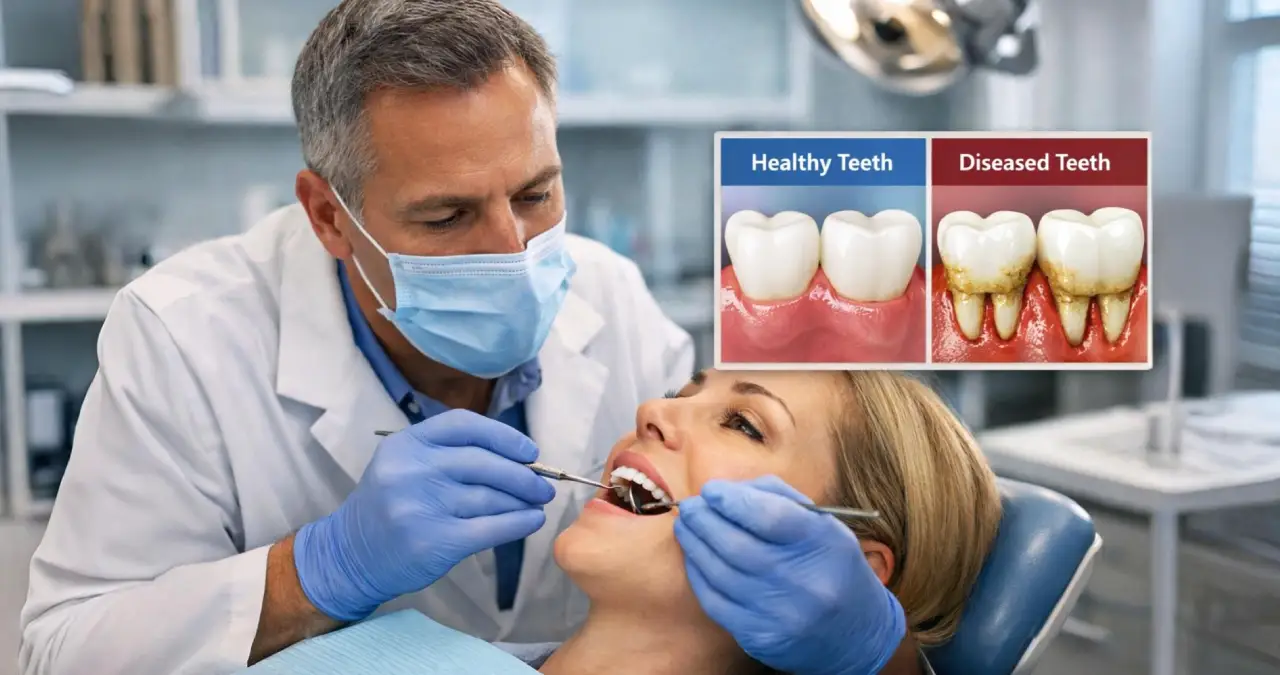
Bleeding gums. Persistent bad breath. Teeth that feel slightly loose when you bite down. These symptoms often feel minor—until they’re not. Periodontal disease progresses quietly, and many people don’t realize the damage until it begins threatening their teeth.
That’s why one question dominates dental searches today:
How long can you keep your teeth with periodontal disease?
Most people can keep their teeth for decades—and often a lifetime—with periodontal disease if it’s diagnosed early and managed consistently.
According to long-term periodontal studies and clinical guidelines followed by dentists worldwide, tooth loss is not inevitable. Disease control—not the diagnosis itself—determines tooth survival.
What Is Periodontal Disease and Why Does It Affect Tooth Longevity?
Periodontal disease is a chronic bacterial infection that affects the gums and the bone supporting your teeth. It begins when plaque accumulates along the gumline. If not removed, plaque hardens into tartar, allowing bacteria to invade beneath the gums.
Over time, this infection:
- Destroys connective tissue
- Causes progressive jawbone loss
- Weakens the structures holding teeth in place
This is why periodontal disease is the leading cause of adult tooth loss worldwide—not aging.
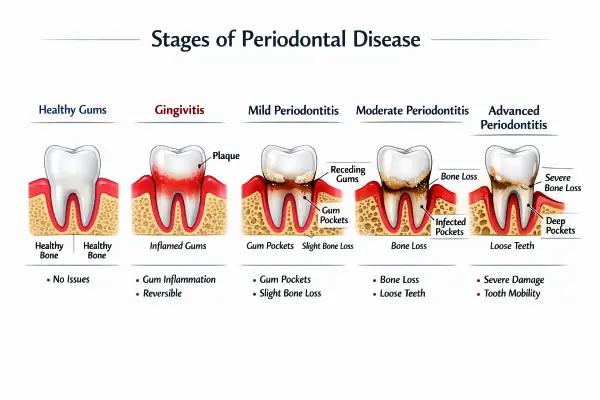
Stages of Periodontal Disease and How Long Teeth Can Last
Gingivitis (Early Stage)
- Red, swollen gums
- Bleeding during brushing
- No bone loss
Tooth lifespan: Lifetime (fully reversible with treatment)
Mild Periodontitis
- Early bone involvement
- Shallow gum pockets
Tooth lifespan: Several decades with professional care
Moderate Periodontitis
- Measurable bone loss
- Gum recession
- Mild tooth looseness
Tooth lifespan: Long-term retention possible with strict maintenance
Advanced Periodontitis
- Significant bone destruction
- Tooth shifting and mobility
Tooth lifespan: Variable; depends heavily on treatment compliance and health factors
How Long Can You Keep Your Teeth With Periodontal Disease?
The Evidence-Based Reality
Most patients retain most or all of their natural teeth when they:
- Follow periodontal treatment plans
- Maintain excellent daily oral hygiene
- Attend regular periodontal maintenance visits
The determining factor isn’t severity alone—it’s long-term disease control.
Key Factors That Determine Tooth Survival
1. Stage at Diagnosis
Earlier detection = significantly better outcomes.
2. Daily Oral Hygiene
Consistent plaque removal slows disease progression dramatically.
3. Professional Periodontal Care
Scaling, root planing, and ongoing maintenance are essential.
4. Lifestyle Factors
- Smoking accelerates bone loss
- Poor nutrition weakens immune response
5. Systemic Health & Genetics
Conditions like diabetes worsen periodontal breakdown if unmanaged.
Warning Signs Your Teeth May Be at Risk
Early Symptoms
- Bleeding gums
- Chronic bad breath
- Gum inflammation
Advanced Symptoms
- Gum recession
- Loose or shifting teeth
- Pain during chewing
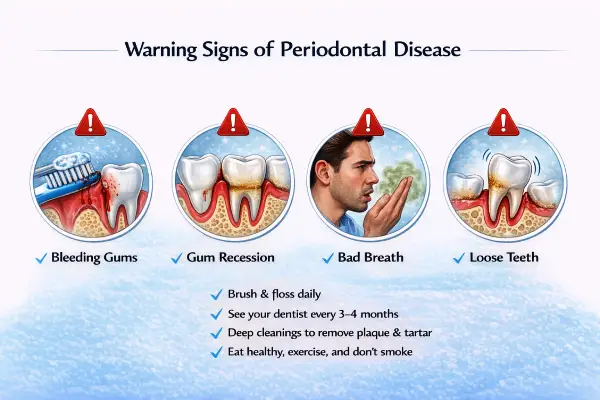
Ignoring these signs shortens tooth lifespan.
Can Periodontal Disease Be Stopped or Reversed?
- Gingivitis: ✔ Fully reversible
- Periodontitis: ✖ Not reversible, but controllable
Once bone is lost, it does not regenerate naturally—but further destruction can be stopped.
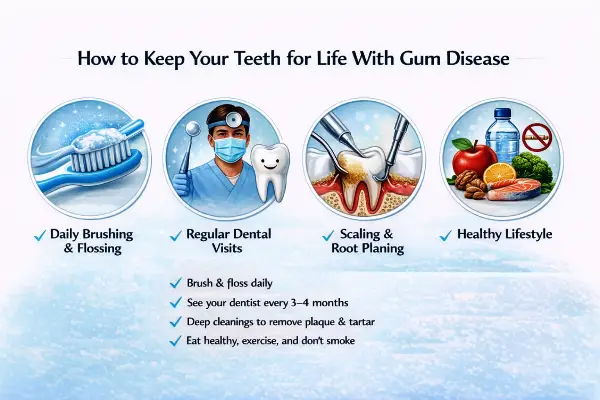
Best Treatments to Keep Teeth Longer
Scaling and Root Planing
Deep cleaning below the gumline to remove bacteria.
Antibiotics & Medications
Used selectively to control infection and inflammation.
Periodontal Surgery
Reduces deep pockets and stabilizes teeth in advanced cases.
Periodontal Maintenance
Cleanings every 3–4 months are critical for long-term success.
How Long Do Teeth Last at Each Stage?
| Disease Stage | Expected Tooth Longevity |
| Gingivitis | Lifetime |
| Mild Periodontitis | Several decades |
| Moderate Periodontitis | Long-term with care |
| Advanced Periodontitis | Variable, treatment-dependent |
What Happens If Periodontal Disease Is Left Untreated?
- Progressive bone loss
- Increasing tooth mobility
- Eventual tooth loss
It’s also linked to:
- Heart disease
- Poor diabetes control
- Respiratory infections
Can You Keep Your Teeth for Life With Periodontal Disease?
Yes—many people do.
Periodontal disease becomes a managed chronic condition, much like high blood pressure. Control—not cure—is the goal.
Common Myths vs Facts
Myth: Everyone loses teeth with age
Fact: Teeth are designed to last a lifetime
Myth: Loose teeth always need removal
Fact: Many can be stabilized with treatment
Final Verdict
So, how long can you keep your teeth with periodontal disease?
For most people, far longer than expected.
With early diagnosis, dentist-guided treatment, and consistent daily care, periodontal disease does not have to lead to tooth loss. Persistence—not perfection—is what protects your smile for life.
FAQs
How long can teeth last with periodontal disease?
Decades or a lifetime with proper treatment.
Can brushing alone stop periodontal disease?
No. Professional periodontal care is essential.
Is periodontal disease painful?
Often painless in early stages, which makes it dangerous.
Can loose teeth tighten again?
Yes, in some cases, once inflammation is controlled.
How often should periodontal patients see a dentist?
Every 3–4 months for periodontal maintenance.