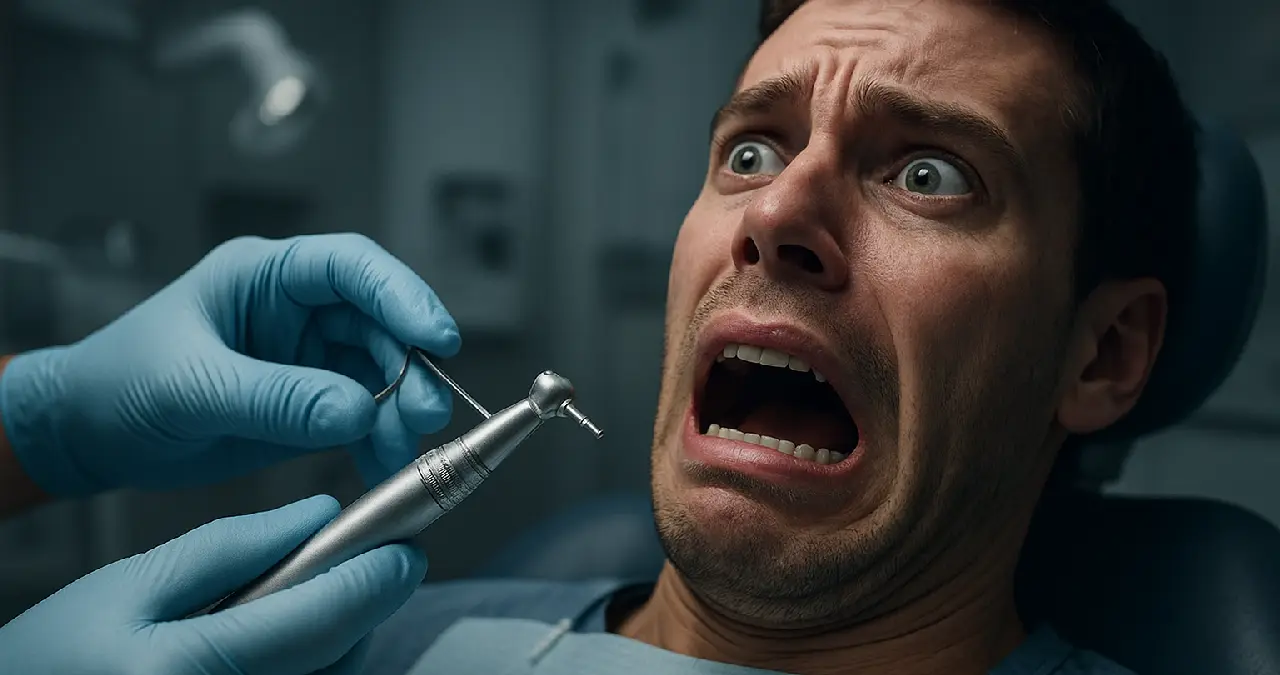
Ever wondered if a root canal without anesthesia is as excruciating as the horror stories suggest? You’re not alone. The thought of drilling into your tooth while your nerves are still fully “on” can feel terrifying. That’s why many avoid treatment — sometimes at the cost of their oral health.
If you’ve asked yourself: “how painful is a root canal without anesthesia?” — this article is for you. We’ll break down exactly what happens during a root canal, explore the sensations and risks when anesthesia is skipped, and help you prepare for a safer, less frightening dental experience.
By the end, you’ll know whether going anesthesia-free is worth the pain — and why most dentists choose to numb the area first.
What Happens During a Root Canal
The Tooth’s “Engine Room” — What Is Pulp and Why Remove It
At the center of a natural tooth lies the dental pulp — a soft core filled with nerves and blood vessels. When decay, trauma, or deep cavities allow bacteria to invade, the pulp can become inflamed or infected. If untreated, infection may spread to the surrounding bone or even other teeth.
A root canal doesn’t mean removing the whole tooth — it removes the diseased pulp, disinfects the internal canals, and seals the tooth to preserve it. This way, you save the natural tooth and keep functioning normally.
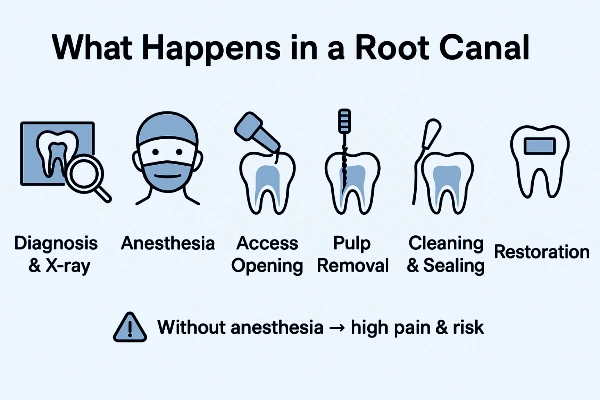
Standard Steps of a Root Canal Procedure
- Diagnosis & X-Rays — dentist evaluates infection and root canal structure.
- Anesthesia (in most cases) — numbing the tooth and gum so you feel little to no pain.
- Access Opening — drilling a small hole through the crown.
- Pulp Removal — removing inflamed or dead tissue from inside canals.
- Cleaning & Shaping — disinfecting and shaping canal system in preparation for filling.
- Filling & Sealing — sealing canals with biocompatible material to prevent reinfection.
- Restoration — often a dental crown or filling to restore tooth strength and function.
Why Dentists Usually Use Anesthesia
What Anesthesia Does – Numbing Pain, Ensuring Comfort
Local anesthesia numbs both the tooth and surrounding gum tissue. It blocks pain signals that would otherwise travel from deep inside the tooth and bone to your brain. For people with anxiety or low pain threshold, sedation options (oral sedatives, nitrous oxide, or IV sedation) help keep them calm while the procedure is done.
Thanks to these advances, many root canals today feel no more painful than a routine filling — perhaps just pressure, vibration, or noise. Painful sensations are largely a thing of the past when anesthesia is properly administered.
Modern Dentistry Values Comfort and Precision
With anesthesia, patients stay still and comfortable. That allows dentists to work precisely — reaching tiny, curved canals, avoiding damage, and thoroughly cleaning. Pain-free procedures aren’t just better for patients — they’re safer, more effective, and reduce complications.
What If There’s No Anesthesia — What You’d Feel
Sensations During an Un-Numbed Root Canal
Without numbing, every step becomes painfully real. You’d feel:
- The drill biting into enamel and dentin.
- The scraping and filing when removing pulp and shaping canals.
- Pressure and even sharp pain as files reach deep inside the canal system.
- Irrigation fluids or disinfectants stirring inside — possibly irritating live tissues.
Think of it as deep tooth surgery with all nerves switched on — not a gentle cleaning.
Why Pain May Persist Even After Pulp Removal
Even after removing the main nerve, surrounding tissues (ligaments, bone, gums) still have nerve endings. If there’s inflammation, infection, or pressure from cleaning instruments, those nerves can scream. So pain doesn’t necessarily vanish once the pulp is out — sometimes it gets worse.
How Painful Is It in Reality — Patient Reports & Pain Scale
Many dental resources describe un-anesthetized root canals as “excruciating” — with patients rating pain between 7 and 10 out of 10 on a typical pain scale. Sharp drilling, scraping, and cleaning deep inside canals are often the worst moments.
On the flip side, when anesthesia is used properly, patients commonly report only mild pressure or vibration (maybe 1–3/10) — far less than expected. That stark contrast shows just how much difference numbing makes.
Worst Pain Triggers During Un-Numbed Treatment
- When the drill penetrates close to the nerve endings.
- Pulp removal or scraping inflamed tissue.
- Cleaning deep or curved canals — especially in back teeth.
- Irrigation or disinfectant solutions contacting live tissues.
In short: any contact with live tissue — nerve, ligament, bone — without numbing = high likelihood of sharp, intense pain.
Factors That Can Make It Worse Without Anesthesia
| Factor | How It Amplifies Pain / Risk |
| Severe Infection or Inflammation | Nerves are already irritated — scraping or drilling worsens pain dramatically. |
| Complex Tooth Anatomy (multiple roots, curved canals, back teeth) | More manipulation, deeper cleaning — increases discomfort and risk of complications. |
| Low Pain Threshold or Anxiety | Fear and sensitivity amplify pain perception; psychological distress adds to physical pain. |
| Patient Movement During Pain | Flinching or moving can lead to incomplete cleaning, damage to tissue or tool slip — increasing risk. |
Risks of Doing Root Canal Without Anesthesia
- Incomplete Treatment — painful patients may flinch, move, or ask the dentist to stop. That can lead to missed canals or insufficient cleaning — increasing chance of reinfection.
- Tissue Damage or Bone Injury — working in a hurting mouth makes precision difficult; risk of damaging surrounding tissue or over-drilling increases.
- Psychological Trauma — severe pain during dental treatment can cause lasting dental phobia, making future visits very difficult.
- Infection or Complications — incomplete sealing or rushed work can cause persistent pain, abscess, or failure of root canal therapy.
Given these risks, performing a root canal without anesthesia — when anesthesia is safe and available — is seldom justified.
After a Proper (Numbed) Root Canal — What to Expect
Even with anesthesia, after the procedure some mild discomfort or sensitivity is normal as tissues heal. Typical post-treatment sensations include:
- Tenderness around gums or jaw.
- Slight ache when biting down (before final crown/filling).
- Mild sensitivity to temperature or pressure.
Good after-care helps a lot: eat soft foods, avoid chewing on treated tooth until fully restored, follow your dentist’s instructions. Over-the-counter pain relievers (like ibuprofen or acetaminophen) often manage discomfort until healing.
Compared to the pain during an un-anesthetized procedure, this post-treatment discomfort is usually minimal.
Alternatives When You’re Anxious or Afraid of Needles
If the idea of anesthesia or dental drills makes you nervous — or if you have a sensitivity to local anesthetics — talk to your dentist. You may have options like:
- Topical numbing gels or sprays — helpful for mild procedures or sensitive gums.
- Sedation dentistry — oral sedatives, nitrous oxide (laughing gas), or IV sedation (for severe anxiety or complex work).
- Counter-pressure & distraction techniques — breathing exercises, music, reassuring dentist communication.
Good dentists aim to keep you comfortable — not traumatized.
Should Anyone Actually Get a Root Canal Without Anesthesia?
There are rare situations — extreme allergy to anesthetics, certain medical conditions — where standard numbing may be risky. Even then, dentists typically avoid full un-numbed root canals.
Rather than skip anesthesia entirely, they’ll often use alternatives (sedation, topical agents) or postpone until safe. Given how painful and risky un-anesthetized treatment can be, it should be considered a last-resort — not a first-choice.
How to Prepare for a Root Canal — Smart Patient Tips
- Talk openly with your dentist about fears, allergies, or past reactions. A good dentist will tailor pain management to your needs.
- Ask about sedation or alternatives if you dread injections. There are many modern methods to make treatment bearable.
- Plan ahead for after-care. Soft foods, easy chewing, gentle cleaning — especially if your mouth is numb or sensitive.
- Stick to follow-up and restoration schedule. Delay in final crown or filling can lead to reinfection.
Being proactive and communicative helps ensure treatment is both safe and comfortable.
Bottom Line — Is a Root Canal Without Anesthesia Ever Worth It?
Skipping anesthesia for a root canal isn’t just painful — it’s risky and potentially damaging. With today’s dental technology and pain-management options, there are few — if any — good reasons to endure the agony.
If anesthesia is an issue, discuss alternatives with your dentist. Don’t suffer because of fear or misunderstanding. With proper care, a root canal can — and should — be as painless and stress-free as possible.
Conclusion
A root canal without anesthesia can turn what should be a tooth-saving procedure into a painful, traumatic ordeal. Because dental pulp, nerves, and surrounding tissues are highly sensitive — drilling, scraping, and cleaning inside them without numbing almost always leads to severe pain.
Thanks to modern dentistry and anesthesia techniques, root canals today are often no more uncomfortable than a simple filling — maybe a bit of pressure or vibration, but no stabbing pain.
If you’re worried about pain, allergies, or needle phobia — talk to your dentist. There are multiple sedation and numbing options that can make the experience manageable.
Your dental health is worth it. Don’t let fear risk your smile or well-being.
FAQs
Can a root canal ever be completely pain-free?
Yes — with proper local anesthesia or sedation, many patients report feeling only pressure or vibration, not pain. With a skilled dentist, a root canal can be nearly painless.
If I’ve had a bad reaction to anesthesia before, does that mean I can’t get one now?
Not necessarily. Tell your dentist about previous reactions. They may try a different anesthetic, use topical numbing, or provide sedation to ensure comfort.
Does skipping anesthesia make the root canal faster?
No — it often makes it slower or more complicated. Pain can cause movement, making it harder for the dentist to work accurately — and increasing the risk of errors.
Will I always need a crown after a root canal?
Not always — but many teeth, especially back molars or teeth with large restorations, are weaker after root canal. A crown protects the tooth and prevents fracture, extending its life.
What should I do if I feel sharp pain a few days after root canal (with anesthesia)?
Mild soreness for a few days is normal. But if pain is strong, persists, worsens, or is accompanied by swelling — contact your dentist. It could indicate infection or complications.