Dental implant pain can hit at the worst moment — like a sudden jolt when you’re trying to recover peacefully. The good news? Most discomfort after a dental implant is normal, temporary, and easy to manage with the right steps.
If you’ve been searching for how to relieve pain from dental implant, this simple, practical, and beginner-friendly guide will help you feel better fast.
Let’s break down exactly what’s normal, what’s not, and what you can do right now to reduce the pain safely.
What’s Normal After a Dental Implant? (Understanding Typical Pain and Healing)
Feeling pain for the first few days is not a sign of failure — it’s simply your body healing. Think of the implant area as a tiny construction zone where tissue rebuilding naturally causes soreness.
Typical healing timeline
- First 24–72 hours: Peak swelling and discomfort
- 3–7 days: Pain gradually reduces
- 2 weeks: Soft tissues mostly healed
- 3–6 months: Bone begins fusing with the implant (osseointegration)
As long as your pain steadily improves, everything is progressing normally.
When to Worry: Signs of Complications
Dental implant pain becomes abnormal when it:
- Gets worse instead of better
- Comes with fever or chills
- Includes pus, bad taste, or constant bleeding
- Causes severe swelling that spreads
- Includes numbness or tingling lasting more than 24 hours
- Leads to difficulty swallowing or breathing
These symptoms may indicate infection or nerve irritation — contact your dentist immediately if any appear.
Immediate Steps to Relieve Pain (First 24–72 Hours)
These are the fastest, safest ways to reduce implant pain right after surgery.
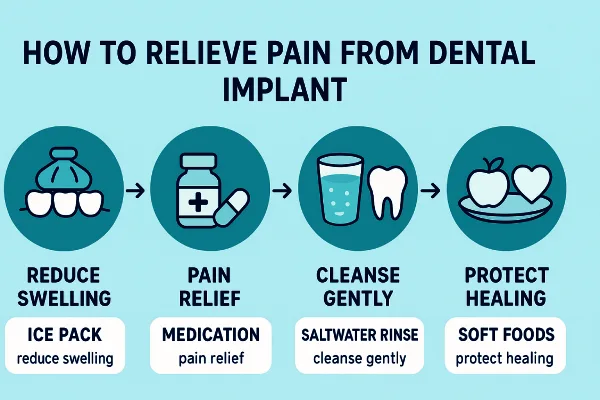
Use Ice, Not Heat
Cold therapy is your best friend in the first two days.
- Apply an ice pack wrapped in cloth
- 15 minutes on / 15 minutes off
- Continue for up to 48 hours
Ice minimizes swelling — heat should be avoided early on because it increases inflammation.
Rest and Elevate Your Head
Keeping your head elevated reduces pressure and swelling.
Sleep with 2 pillows or rest in a recliner for the first two nights.
Use Prescribed Painkillers the Right Way
Most dentists recommend:
- Ibuprofen (anti-inflammatory)
- Acetaminophen (pain relief)
You can alternate them or combine them (if your dentist approves) for stronger relief.
Avoid exceeding recommended doses.
At-Home Remedies That Help (Safe and Effective)
Saltwater Rinses: Your Gentle Antiseptic
Start rinsing after 24 hours, not immediately after surgery.
- Mix ½ teaspoon of salt in a cup of warm water
- Rinse gently 2–3 times daily
- Don’t swish hard or spit forcefully
This soothes the area and reduces bacteria naturally.
Best OTC Pain Medications
- Ibuprofen 200–400 mg (reduces pain + inflammation)
- Acetaminophen 500–1000 mg (reduces pain only)
Avoid aspirin if your dentist advised against it.
Always check for medication interactions.
Foods to Eat
Choose soft, cool, and nourishing options:
- Yogurt
- Smoothies
- Mashed potatoes
- Scrambled eggs
- Soft soups (warm, not hot)
Foods to Avoid
- Crunchy snacks
- Hot foods and drinks
- Sticky or chewy foods
- Spicy or acidic items
- Alcohol
Gentle Oral Care Tips
- Use a soft-bristle toothbrush
- Avoid brushing directly on the implant for a few days
- Keep the rest of your mouth clean to prevent infection
Advanced Home Strategies (If Pain Persists)
Warm Salt Rinses After 72 Hours
After swelling reduces, warm (not hot) saltwater boosts blood flow and healing.
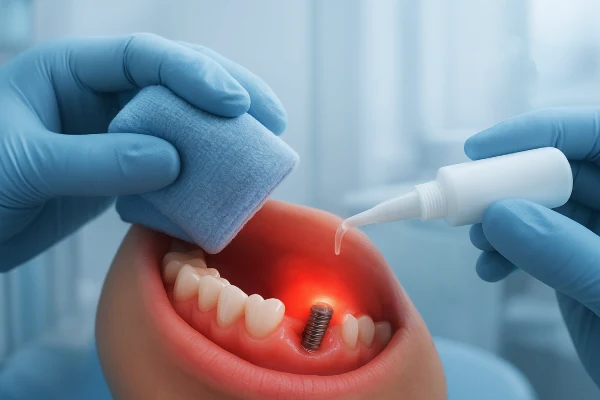
Topical Gels and Numbing Agents
Benzocaine-based oral gels can numb sore gums temporarily.
Use sparingly and follow label directions.
Night Guards for Teeth Grinding
If you grind your teeth, pressure on the implant increases pain.
A soft night guard can greatly reduce discomfort.
Medical Treatments and When to See Your Dentist
Antibiotics
Your dentist may prescribe antibiotics if:
- There is infection
- Pain worsens
- Swelling spreads
- You have medical risks
Do not self-prescribe or take leftover antibiotics.
X-rays or Follow-Ups
Your dentist may check:
- Implant positioning
- Bone health
- Signs of peri-implantitis
- Healing progress
Managing Implant Infection (Peri-implantitis)
This condition requires:
- Professional deep cleaning
- Possible antibiotics
- Laser therapy (in some clinics)
- Surgical correction in advanced cases
Early treatment prevents implant failure.
Lifestyle and Long-Term Care for Comfort
Avoid Smoking and Alcohol
Smoking drastically slows bone healing.
Alcohol interacts with medications and delays recovery.
Eat Healing-Friendly Foods
Support healing with:
- Protein
- Vitamin C
- Zinc
- Calcium
These nutrients repair tissues and strengthen the bone around the implant.
Sleep and Stress Management
Stress heightens pain sensitivity.
Good sleep accelerates healing and reduces inflammation.
Pain Prevention Tips Before and During Implant Surgery
Pre-op Preparation
Follow all pre-surgery instructions including fasting and medication adjustments.
Choose an Experienced Implant Surgeon
Skill and technique directly affect postoperative pain and recovery speed.
Know Your Post-op Instructions
Before leaving the clinic, confirm:
- Medication schedule
- When to start brushing
- Food restrictions
- Emergency signs to watch for
Myths and Misconceptions About Dental Implant Pain
“Implants Should Not Hurt at All”
Mild discomfort is normal — even expected.
Dangerous Home Remedies
Avoid:
- Undiluted essential oils
- DIY herbal pastes
- Alcohol rinses
- Applying heat too early
Stick to proven, dentist-approved care.
Quick Troubleshooting Checklist — Try These 10 Things Right Now
- Apply ice (15 minutes on/off).
- Keep your head elevated.
- Take recommended pain meds.
- Rinse gently with saltwater after 24 hours.
- Eat soft foods only.
- Avoid smoking or drinking.
- Use oral numbing gels cautiously.
- Brush gently and avoid the implant site.
- Watch for red-flag symptoms.
- Call your dentist if pain worsens after day 3–4.
Conclusion — Fast Comfort Without Panic
Pain after a dental implant is usually temporary and easily managed with simple at-home steps. By using ice, taking your medications responsibly, rinsing with saltwater, eating soft foods, and keeping stress low, you can heal faster and more comfortably.
But if pain worsens, swelling increases, or infection signs appear, don’t wait — your dentist can resolve issues quickly. Following these steps ensures your implant heals smoothly and lasts for years.
Frequently Asked Questions
How long does dental implant pain normally last?
Most people feel better within 3–7 days, with major swelling gone by week two.
What is the fastest way to relieve dental implant pain?
Ice + ibuprofen + gentle saltwater rinses provide the quickest relief.
Is swelling normal after a dental implant?
Yes, swelling peaks in 48–72 hours and slowly decreases over a week.
When should I call my dentist?
If pain worsens after day 3–4, or if you have fever, pus, or severe swelling.
Can I use home remedies for implant pain?
Yes, but stick to safe ones only: ice, saltwater, OTC pain meds, soft foods.