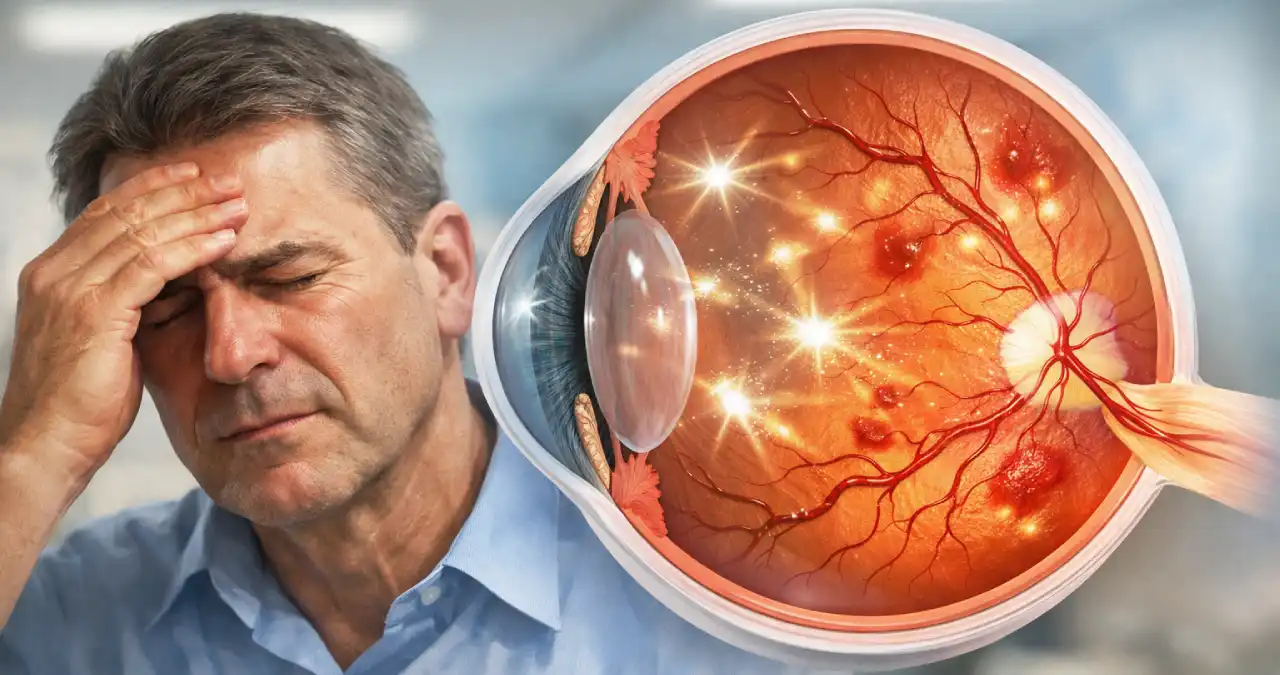
Sudden flashes of light in your vision—like camera flashes, lightning streaks, or shimmering stars—can be unsettling. Many people dismiss them as eye strain or fatigue. But if you have high blood pressure, these visual disturbances may be an early warning sign of serious eye damage.
So, can high blood pressure cause flashing lights in eyes?
Yes. Uncontrolled hypertension can damage the delicate blood vessels of the retina and optic nerve, leading to flashing lights, blurred vision, and even permanent vision loss if left untreated.
What Are Flashing Lights in the Eyes?
Flashing lights, medically called photopsia, are visual sensations that occur without any external light source. They result from irritation or reduced blood supply to the retina or optic nerve.
Common Descriptions of Eye Flashes
- Sparkles or stars
- Zigzag or shimmering lines
- Brief camera-flash effects
- Flickering lights in side (peripheral) vision
These are neurological signals, not imagination or eye fatigue.
How Long Do Flashing Lights Last?
- Seconds to minutes in mild cases
- Recurrent episodes over days or weeks
- Persistent flashes are more concerning
If flashes occur repeatedly—especially in people with high blood pressure—they require medical evaluation.
Understanding High Blood Pressure (Hypertension)
High blood pressure occurs when the force of blood against artery walls remains elevated over time, damaging blood vessels throughout the body.
Why the Eyes Are Vulnerable
The retina depends on tiny, delicate blood vessels. Even mild vessel damage can disrupt vision before other organs show symptoms.
Can High Blood Pressure Cause Flashing Lights In Eyes?
High blood pressure can cause flashing lights in the eyes by damaging retinal blood vessels and reducing oxygen supply to the optic nerve.
How It Happens
- Narrowed retinal arteries
- Reduced blood flow and oxygen
- Retinal or optic nerve irritation
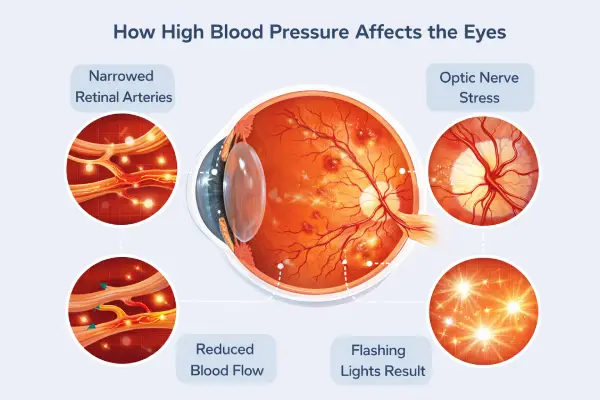
The brain interprets these abnormal signals as flashes of light.
Eye Conditions Caused by High Blood Pressure
1. Hypertensive Retinopathy
The most common eye condition is linked to hypertension.
Early Signs
- Narrowed retinal vessels
- Mild vision changes
- Occasional flashing lights
Advanced Damage
- Retinal swelling
- Internal bleeding
- Persistent flashes or vision loss
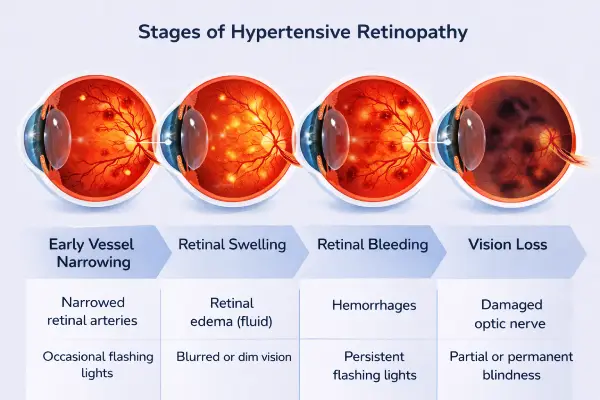
Untreated cases may lead to permanent blindness.
2. Hypertensive Choroidopathy
Occurs during sudden or severe blood pressure spikes.
Symptoms
- Distorted or blurry vision
- Light flashes
- Dark patches in vision
3. Hypertensive Optic Neuropathy
Extremely high blood pressure can damage the optic nerve.
Warning Signs
- Flashing lights
- Reduced visual clarity
- Vision loss if untreated
Why Flashing Lights Should Never Be Ignored
Flashing lights may signal:
- Retinal ischemia (lack of oxygen)
- Blood vessel stress
- Nerve damage
Ignoring them is similar to ignoring chest pain—it delays lifesaving treatment.
Other Vision Symptoms Linked to High Blood Pressure
- Blurred or dim vision
- Double vision
- Temporary vision loss
- Eye pressure or pain
Any combination of these symptoms requires urgent medical attention.
Flashing Lights vs Eye Floaters: What’s the Difference?
| Feature | Flashing Lights | Eye Floaters |
| Cause | Retinal or nerve stimulation | Debris in eye fluid |
| Appearance | Light streaks or sparkles | Dots, strings, cobwebs |
| Risk | Often serious | Usually harmless |
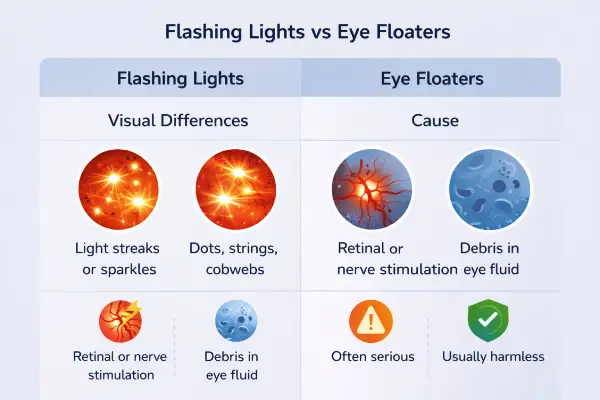
⚠️ Flashes + sudden floaters may indicate retinal detachment—a medical emergency.
High Blood Pressure Emergencies and Vision Loss
Hypertensive Crisis Symptoms
- Intense flashing lights
- Severe blurred vision
- Temporary or permanent blindness
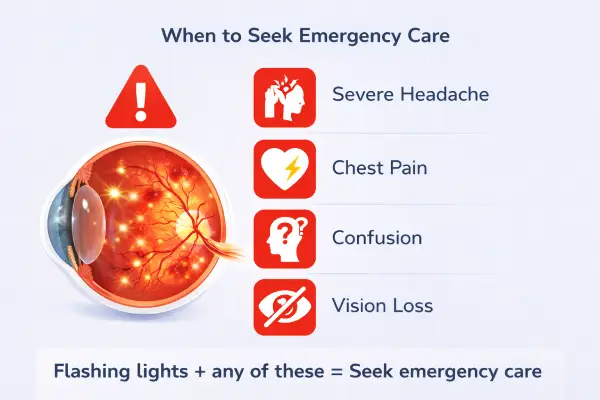
Seek Emergency Care If Flashes Occur With:
- Severe headache
- Chest pain
- Shortness of breath
- Confusion or weakness
Who Is Most at Risk?
- Adults over 50
- Long-term hypertension patients
- Smokers
- People with diabetes or kidney disease
When Should You See a Doctor?
Do Not Delay If You Have:
- Repeated flashing lights
- Flashes lasting longer than a few minutes
- Any vision loss or distortion
Which Doctor to Consult
- Primary physician – blood pressure control
- Ophthalmologist – detailed eye examination
How Doctors Diagnose the Cause
- Blood pressure monitoring
- Dilated retinal exam
- Retinal imaging
- Optical coherence tomography (OCT)
Treatment Options
Managing High Blood Pressure
- Antihypertensive medications
- Reduced salt intake
- Regular physical activity
- Stress management
Treating Eye Damage
- Strict blood pressure control
- Advanced eye treatments if required
Can Flashing Lights Be Reversed?
Yes—if caught early.
Once blood pressure stabilizes, flashing lights often decrease or disappear. Delayed treatment increases the risk of permanent damage.
Preventing Vision Damage From High Blood Pressure
- Maintain healthy blood pressure levels
- Avoid smoking
- Follow a heart-healthy diet
- Schedule regular eye exams
Eye exams often detect hypertension-related damage before symptoms appear.
Conclusion
So, can high blood pressure cause flashing lights in eyes? Absolutely. These flashes are often early warning signs of retinal or optic nerve damage caused by uncontrolled hypertension. The good news is that early detection, proper treatment, and lifestyle changes can protect your vision. When your eyes send warning signals, listen—your sight may depend on it.
FAQs
Can high blood pressure cause sudden flashing lights in eyes?
Yes. Sudden spikes in blood pressure can rapidly reduce retinal blood flow.
Are flashing lights always dangerous?
Not always, but in people with hypertension, they often signal vascular stress.
Will lowering blood pressure stop flashing lights?
In many cases, yes—if damage isn’t permanent.
Are flashing lights linked to stroke risk?
They can be, especially when combined with neurological symptoms.
Should flashing lights be treated as an emergency?
Yes—if sudden, persistent, or accompanied by headache or vision loss.