
Ever had a headache so intense that it feels like the world has stopped moving?
Many people experience headaches, but when a doctor writes CID10G43 on your medical record, it means something very specific — migraine.
This guide breaks down everything about CID10G43 in the simplest possible way: what it means, why it matters, what causes migraines, the symptoms you shouldn’t ignore, and how diagnosis and treatment actually work.
Let’s dive in — clearly, calmly, and without medical jargon.
Understanding CID10G43
What CID10G43 Actually Means
CID10G43 is the code used in medical systems to describe migraine, a neurological condition known for causing intense, often disabling headaches.
If this code appears in your medical record, it means you’ve been diagnosed with a type of migraine — not just a regular headache.
CID vs ICD — Clearing the Confusion
Many people write CID10G43, but the correct format is ICD-10 G43.
ICD stands for International Classification of Diseases — a global system doctors use to classify illnesses.
CID is commonly used in Portuguese-speaking countries, but both point to the same thing: migraine classification.
Where G43 Fits in the ICD-10 System
The ICD-10 system groups diseases by letters.
- “G” = neurological disorders
- “43” = migraine section
- Numbers after the dot = type of migraine
This helps doctors diagnose precisely and choose the right treatment.
Who Gets Diagnosed With CID10G43
Age & Gender Patterns
Migraines can occur at any age, but they are most common in:
- Teenagers
- Adults aged 20–50
- Women (3× more likely due to hormones)
Genetic & Lifestyle Influence
If migraines run in your family, your risk is significantly higher.
Lifestyle also plays a role — sleep, stress, food, and environment can all trigger attacks.
Why Doctors Use This Code
Doctors assign CID10G43 when your symptoms match known migraine patterns:
- Repeated headache episodes
- Pulsating or throbbing pain
- Sensory changes
- Light or sound sensitivity
It helps in treatment planning and insurance approval.
Types and Subcodes of CID10G43
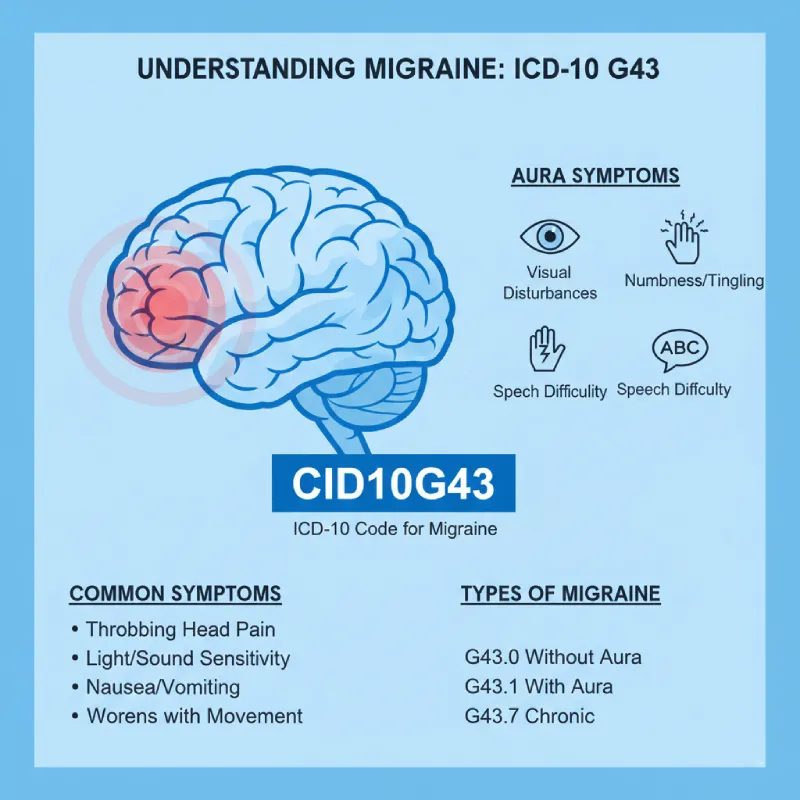
G43.0 — Migraine Without Aura
The most common type.
No warning signs — just sudden, intense headache.
G43.1 — Migraine With Aura
You may see flashes, zigzag lines, or experience tingling before the pain starts.
G43.7 — Chronic Migraine
Headaches on 15+ days per month for more than 3 months.
Other Subcodes
- G43.8 – Other migraine types
- G43.9 – Unspecified migraine
Causes and Triggers of CID10G43 Migraines
Biological and Genetic Causes
Migraines occur due to changes in brain activity and blood flow.
Genetics play a major role — if a parent has migraines, your risk rises.
Hormonal Triggers
Women often experience attacks around:
- Menstruation
- Pregnancy
- Menopause
Lifestyle and Environmental Triggers
Food Triggers
- Aged cheese
- Chocolate
- Processed meats
- Artificial sweeteners
Sleep Triggers
Too much or too little sleep can trigger migraines.
Stress Triggers
Stress and sudden relaxation after stress both start attacks.
Symptoms of CID10G43 Migraines
Headache Characteristics
- Throbbing or pulsing pain
- Usually one-sided
- Worsens with movement
- Moderate to severe intensity
Aura and Neurological Symptoms
About one-third of people experience:
- Visual disturbances
- Numbness or tingling
- Speech difficulty
Digestive and Sensory Symptoms
- Nausea
- Vomiting
- Sensitivity to light
- Sensitivity to sound
Diagnosis: How CID10G43 Is Identified
Medical History & Symptom Diary
Doctors mostly rely on your description:
- How often headaches occur
- Duration
- Symptoms
- Triggers
A headache diary helps a lot.
When Doctors Use Imaging
CT or MRI scans are used only if:
- Headache is sudden & severe
- Symptoms don’t match migraine
- Neurological changes persist
Red Flags That Need Urgent Care
Seek help immediately if you have:
- “Worst headache of your life”
- Fever with headache
- Fainting
- Vision loss
Treatment Options for CID10G43 Migraines
Acute Treatment (During an Attack)
- NSAIDs (ibuprofen, naproxen)
- Triptans
- Antiemetics for nausea
- Fast-acting nasal or injectable medicines
Preventive Medications
Used when migraines occur often:
- Beta-blockers
- Anti-seizure medicines
- Antidepressants
- CGRP inhibitors
Non-Drug Therapies
- Cognitive Behavioral Therapy
- Biofeedback
- Relaxation techniques
Home Remedies That Help
- Hydration
- Cold compress
- Resting in a dark room
- Avoiding screens
Living With CID10G43
Daily Management Tips
- Follow a sleep schedule
- Eat regular meals
- Identify and avoid triggers
- Reduce caffeine and alcohol
Migraine-Friendly Routine
Small, consistent habits make the biggest impact.
Work, School, and Social Life Adjustments
- Plan rest breaks
- Keep medicine in your bag
- Use sunglasses or earplugs if needed
When to See a Specialist
Signs You Need a Neurologist
- Frequent attacks
- Medication not helping
- Severe or unusual symptoms
Advanced Treatment Options
- Botox
- Nerve blocks
- Newer biologic injections
Why CID10G43 Coding Matters
Insurance & Medical Records
This code ensures:
- Accurate billing
- Approval for migraine-specific treatments
Treatment Access and Documentation
Proper coding helps doctors track your progress over time.
Myths & Misconceptions About Migraines
“It’s Just a Headache”
No — it’s a neurological disorder.
“You Need Aura to Have Migraine”
Many migraines occur without aura.
“Nothing Can Help”
Most people improve with the right treatment plan.
Summary
CID10G43 refers to migraine, a powerful neurological condition.
Understanding this code helps you take control, find better treatment, and live with fewer interruptions.
Conclusion
Migraines under the CID10G43 classification are more than painful headaches — they’re a medical condition that can be managed with the right knowledge and strategy. With clear diagnosis, lifestyle adjustments, medication, and support from healthcare professionals, you can reduce attack frequency, ease your symptoms, and live more comfortably.
FAQs
1. What does CID10G43 mean?
It is the ICD-10 code for migraine, used in medical records.
2. Can migraines be cured?
There’s no cure, but they can be managed very effectively.
3. Are migraines dangerous?
Most are not dangerous but can be disabling.
4. Do all migraines have aura?
No — many people never experience aura.
5. Can children be diagnosed with CID10G43?
Yes, migraines can occur even in childhood.