Ever winced while yawning or chewing three weeks after getting a wisdom tooth pulled? You probably thought the pain would vanish after a few days, but here you are, still feeling that nagging ache. If this sounds familiar, you’re not alone. Lingering discomfort is surprisingly common, and understanding the reasons behind it can save you unnecessary worry. In this guide, we’ll explore why you might be experiencing jaw pain 3 weeks after wisdom tooth extraction and even cover jaw and ear pain 3 weeks after wisdom tooth extraction.
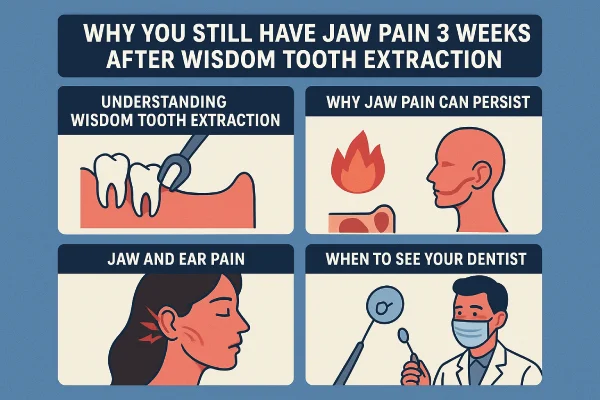
Understanding Wisdom Tooth Extraction
What Happens During Extraction
Wisdom tooth extraction isn’t just a simple tooth pull—it’s a surgical procedure. Dentists often have to cut through gum tissue and, in some cases, remove a bit of bone to get the tooth out. This causes trauma to the surrounding area, including your jaw muscles and nerves.
Common Recovery Timelines
Typically, the first 3–5 days are the most painful. Swelling peaks during this period and starts to subside afterward. By two weeks, most people notice significant improvement, but for some, discomfort can linger even at the three-week mark.
Expected Discomfort and Healing Process
Your body is repairing bone, soft tissue, and blood vessels at the extraction site. This healing can create pressure and soreness in the jaw. Mild tenderness is normal, but understanding what’s typical is key to identifying complications.
Why Jaw Pain Can Persist
Normal Post-Operative Inflammation
Inflammation is your body’s natural response to surgery. Even after two or three weeks, residual swelling can make your jaw feel stiff or achy, especially when chewing.
Muscle Strain from Jaw Movement
Your jaw has been through trauma, so opening wide, yawning, or eating tough foods can strain muscles that are still healing. Think of it like a pulled hamstring—you wouldn’t run a marathon right after injury.
Bone and Socket Healing
The extraction leaves a small socket where the tooth was. Bone regrowth takes time, and the surrounding tissues can remain sensitive until full healing occurs.
Jaw and Ear Pain 3 Weeks After Wisdom Tooth Extraction
Connection Between Jaw and Ear Pain
Ever noticed your jaw ache radiates to your ear? The nerves in your jaw and ear are interconnected. Inflammation or tension in the jaw can easily trigger ear discomfort.
Temporomandibular Joint (TMJ) Irritation
The TMJ connects your jaw to your skull. Surgery or swelling can irritate this joint, causing a dull ache that spreads to your ear or face.
Nerve Involvement
Sometimes the nerves near the extraction site get temporarily irritated, causing shooting or tingling pain. This can contribute to the discomfort in both your jaw and ear.
Possible Complications Causing Persistent Pain
Dry Socket (Alveolar Osteitis)
If the blood clot in the extraction site dissolves too early, a dry socket can form. This is usually accompanied by sharp pain radiating to the ear or temple and can appear 3–5 days after extraction—but occasionally later.
Infection in the Extraction Site
Signs of infection include swelling, redness, pus, and sometimes a foul taste or odor. Infections can prolong pain and slow down healing.
Impacted or Partially Removed Teeth Remnants
Rarely, fragments of tooth or bone may remain, causing persistent irritation. Dentists can identify and remove these remnants to relieve discomfort.
Signs You Should See a Dentist Immediately
Severe, Throbbing Pain
Pain that suddenly worsens or doesn’t respond to over-the-counter painkillers isn’t normal.
Swelling, Pus, or Fever
Any sign of infection warrants prompt dental attention.
Numbness or Tingling
Persistent numbness could indicate nerve damage and should be assessed immediately.
Self-Care and Home Remedies
Cold Compress and Warm Compress Techniques
Use a cold compress for the first 24–48 hours to reduce swelling. After that, gentle warm compresses can relax jaw muscles and improve blood flow.
Gentle Jaw Exercises and Stretches
Small, controlled jaw movements can prevent stiffness and promote healing. Avoid wide yawns or hard chewing.
Over-the-Counter Pain Relief
NSAIDs like ibuprofen can reduce both pain and inflammation. Always follow dosage instructions and consult your doctor if needed.
Dietary Tips to Reduce Jaw Pain
Soft Foods and Avoiding Hard/Chewy Items
Stick to soups, yogurt, mashed potatoes, or smoothies. Avoid nuts, chips, and chewy meats that can strain your jaw.
Anti-Inflammatory Foods
Foods like turmeric, ginger, and leafy greens may help reduce inflammation naturally.
Hydration and Oral Hygiene
Rinsing gently with warm salt water can prevent infection and keep the extraction site clean.
Managing Jaw Pain with Medications
Painkillers and Anti-Inflammatory Drugs
Over-the-counter options like ibuprofen or acetaminophen are commonly used.
Antibiotics (If Infection Is Suspected)
If your dentist identifies an infection, antibiotics may be prescribed to clear it.
Topical Gels for Localized Relief
Anesthetic gels can be applied to the gums for temporary relief, especially before meals.
When Pain Persists Beyond Normal Healing Time
Chronic Jaw Discomfort
Some people experience ongoing tenderness due to prolonged inflammation or minor nerve involvement.
Long-Term Nerve Irritation
Persistent numbness or tingling may require further dental evaluation to prevent permanent nerve damage.
Dental or Oral Surgery Follow-Ups
A follow-up appointment ensures the extraction site is healing properly and identifies any complications early.
Tips to Prevent Jaw Pain After Future Extractions
Proper Post-Operative Care
Follow your dentist’s instructions carefully—use prescribed medications, maintain oral hygiene, and rest.
Gentle Jaw Exercises
Start jaw exercises a few days after surgery to prevent stiffness and TMJ problems.
Early Management of Swelling and Pain
Use cold compresses initially and switch to warm compresses later to keep muscles relaxed.
The Role of Stress and Jaw Clenching
How Stress Affects Healing
Stress can tighten jaw muscles, slow healing, and amplify pain perception.
Bruxism (Teeth Grinding) and Jaw Pain
Grinding or clenching teeth can worsen jaw discomfort and delay recovery.
Relaxation Techniques
Meditation, deep breathing, or jaw relaxation exercises can help reduce tension.
Physical Therapy for Jaw Pain Relief
Simple Exercises for TMJ Recovery
Gentle opening and closing of the mouth or side-to-side movements can help restore mobility.
Massage and Jaw Relaxation Techniques
Massaging the jaw muscles can relieve tension and reduce pain.
When to Consult a Physical Therapist
If discomfort persists beyond a month, a specialist can design a personalized therapy plan.
Myths and Misconceptions About Post-Extraction Pain
“Pain Should Disappear in a Few Days” Myth
Healing varies per person—some discomfort lasting up to 3 weeks can be normal.
Ignoring Ear Pain Is Harmless Myth
Ear pain can indicate TMJ involvement or nerve irritation. Don’t ignore persistent symptoms.
Overusing Painkillers Myth
Painkillers help but shouldn’t be relied upon excessively—overuse can harm your liver or stomach.
Conclusion
Experiencing jaw pain 3 weeks after wisdom tooth extraction or even jaw and ear pain 3 weeks after wisdom tooth extraction can be unnerving, but in most cases, it’s part of the normal healing process. Inflammation, muscle strain, or minor nerve irritation often cause lingering discomfort. By following proper post-operative care, gentle exercises, and monitoring for warning signs like severe pain, swelling, or numbness, you can recover safely. Always consult your dentist if anything seems off—early intervention prevents complications and ensures a smooth recovery.
FAQs
Is jaw pain 3 weeks after extraction normal?
Yes, mild to moderate jaw pain can persist due to inflammation, muscle strain, and healing of bone and gums.
Why do I feel ear pain along with jaw pain?
Jaw and ear share nerves and muscles. TMJ irritation or nerve inflammation can cause ear discomfort.
How can I speed up recovery at home?
Use cold and warm compresses, eat soft foods, practice gentle jaw exercises, and follow dentist instructions.
When should I worry about infection?
Seek attention if you notice swelling, pus, fever, or severe throbbing pain.
Can jaw exercises help reduce long-term pain?
Yes, controlled jaw movements and TMJ exercises can prevent stiffness and aid recovery.