Mental Health Skill Building is one of the most effective ways to manage stress and anxiety in today’s fast-paced, high-pressure world. When stress feels constant and anxiety creeps in without warning, it can seem like there’s no off switch. But here’s the truth—mental well-being isn’t just something you hope for; it’s something you can actively build.
Mental Health Skill Building focuses on developing practical, evidence-based skills that help you regulate emotions, manage stress responses, and face daily challenges with confidence instead of overwhelm. Think of it like learning mental fitness—small daily practices that create long-term emotional strength.
What Is Mental Health Skill Building?
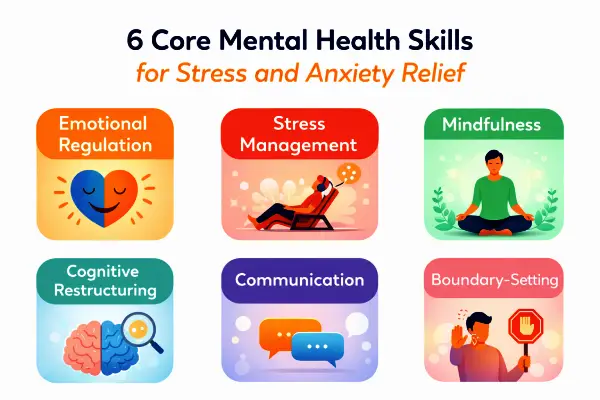
Mental Health Skill Building refers to structured techniques that strengthen emotional, cognitive, and behavioral abilities. These skills help individuals cope with stress, reduce anxiety, and maintain mental balance during challenging situations.
Key Mental Health Skills Include:
- Emotional regulation skills
- Stress management techniques
- Mindfulness and grounding practices
- Cognitive restructuring skills
- Communication and boundary-setting skills
Just like physical exercise strengthens the body, these skills strengthen the mind over time.
Why Mental Health Skill Building Matters Today
Modern life rarely slows down. Notifications, deadlines, financial pressure, and social expectations pile up quickly. Without effective coping skills, stress accumulates and anxiety becomes chronic.
Mental Health Skill Building gives you control over your internal experience, even when external stressors remain. Instead of reacting on autopilot, you learn to respond with intention.
Understanding Stress and Anxiety
Difference Between Stress and Anxiety
Stress is typically triggered by external demands—workload, exams, finances, or responsibilities. Anxiety, however, tends to persist even after the stressor disappears. It’s fueled by worry, anticipation, and fear of the unknown.
Common Triggers in Daily Life
Workload and Performance Pressure
Tight deadlines, multitasking, and job insecurity can overwhelm the nervous system.
Relationships and Social Expectations
Fear of judgment, conflict, or unmet expectations often fuels emotional distress.
How Stress and Anxiety Affect Mental Health
When unmanaged, stress and anxiety can:
- Disrupt sleep
- Lower focus and productivity
- Increase irritability
- Affect physical health and immunity
This is why mental health skill building is not optional—it’s essential.
The Science Behind Mental Health Skill Building
How the Brain Responds to Stress
Stress activates the fight-or-flight response, releasing cortisol and adrenaline. While useful in emergencies, constant activation keeps the brain in survival mode.
Mental health skills help regulate this response and restore balance.
Neuroplasticity and Skill Development
The brain is adaptable. Repeated practice of coping skills creates new neural pathways, allowing healthier emotional responses to replace reactive patterns.
Why Skills Can Rewire Thought Patterns
Each time you choose a calmer response, you weaken negative thought loops. Over time, emotional regulation becomes automatic.
Core Mental Health Skill Building Techniques
Emotional Regulation Skills
Emotional regulation isn’t suppression—it’s awareness and control.
Identifying Emotional Triggers
Understanding what sparks strong reactions helps you prepare instead of react.
Naming and Processing Emotions
Labeling emotions reduces their intensity and increases self-control.
Cognitive Restructuring Skills
Your thoughts shape how you experience stress.
Challenging Negative Thought Patterns
Question automatic thoughts like:
- “I always fail”
- “Something bad will happen”
Reframing Thoughts Positively
Replace catastrophic thinking with balanced, realistic perspectives.
Mindfulness-Based Skill Building
Mindful Breathing Techniques
Slow, intentional breathing calms the nervous system and reduces anxiety within minutes.
Body Scan and Grounding Exercises
These practices anchor attention in the present moment.
The 5-4-3-2-1 Grounding Method
- 5 things you see
- 4 things you feel
- 3 things you hear
- 2 things you smell
- 1 thing you taste
Coping Skills for Immediate Stress Relief
Short-Term Coping Strategies
Box Breathing
Inhale, hold, exhale, hold—each for four seconds.
Progressive Muscle Relaxation
Tense and release muscles to reduce physical anxiety.
Long-Term Coping Skill Development
Long-term skills focus on reducing baseline stress, making emotional regulation easier over time.
Communication and Social Skills for Mental Health
Assertive Communication
Clear expression of needs reduces frustration and emotional buildup.
Setting Healthy Boundaries
Boundaries protect mental energy and prevent burnout.
Building Supportive Relationships
Strong social connections buffer stress and improve emotional resilience.
Behavioral Skills That Reduce Anxiety
Routine and Structure Building
Predictability helps calm an anxious mind.
Habit Stacking for Mental Wellness
Pair new skills with existing habits for consistency.
Exposure-Based Skill Building
Gradual exposure reduces fear and avoidance.
Stress Management Through Lifestyle Skills
Sleep Hygiene Skills
Consistent sleep improves emotional regulation and stress tolerance.
Nutrition and Mental Health
Foods That Support Brain Health
- Omega-3 fatty acids
- Whole grains
- Fruits and vegetables
Emotional Resilience and Mental Strength
Building Resilience Through Daily Practice
Resilience is adaptability, not toughness.
Learning from Setbacks
Challenges become lessons rather than failures.
Self-Compassion as a Skill
Kind self-talk reduces anxiety and boosts motivation.
Mental Health Skill Building Across Life Stages
Children and Adolescents
Emotional literacy and coping skills build lifelong resilience.
Adults and Professionals
Time management and stress regulation are essential.
Older Adults
Skill building supports emotional balance during transitions.
Role of Mental Health Professionals
Skill Building in Therapy
Therapies like CBT and DBT emphasize practical mental health skills.
When to Seek Professional Help
If anxiety interferes with daily life, professional support accelerates progress.
Digital Tools and Resources for Skill Building
Mental Health Apps
Apps provide guided exercises, reminders, and mood tracking.
Online Programs and Workbooks
Structured learning supports independent skill development.
Creating a Personalized Mental Health Skill Plan
Identifying Stress Patterns
Awareness is the foundation of change.
Tracking Progress Over Time
Journals or apps help refine strategies.
Staying Consistent Without Burnout
Small, consistent steps outperform intensity.
Common Myths About Mental Health Skill Building
“Skills Don’t Work for Me”
Skills require practice—results grow over time.
“I Should Handle This Alone”
Support accelerates healing and growth.
Benefits of Mental Health Skill Building
- Improved emotional control
- Better stress and anxiety management
- Long-term mental stability and resilience
Conclusion
Mental Health Skill Building for stress & anxiety relief is about developing lifelong tools that empower you to navigate challenges with confidence and clarity. With consistent practice, these skills transform emotional overwhelm into balance, resilience, and lasting mental well-being.
FAQs
How long does mental health skill building take to show results?
Small improvements often appear within a few weeks of consistent practice.
Can mental health skill building replace therapy?
Skills are powerful, but therapy adds guidance and personalization.
Are these skills effective for severe anxiety?
Yes, especially when combined with professional support.
Can I practice mental health skills independently?
Yes, many techniques are designed for daily self-use.
Is mental health skill building suitable for everyone?
Absolutely. Skills can be adapted to all ages and lifestyles.