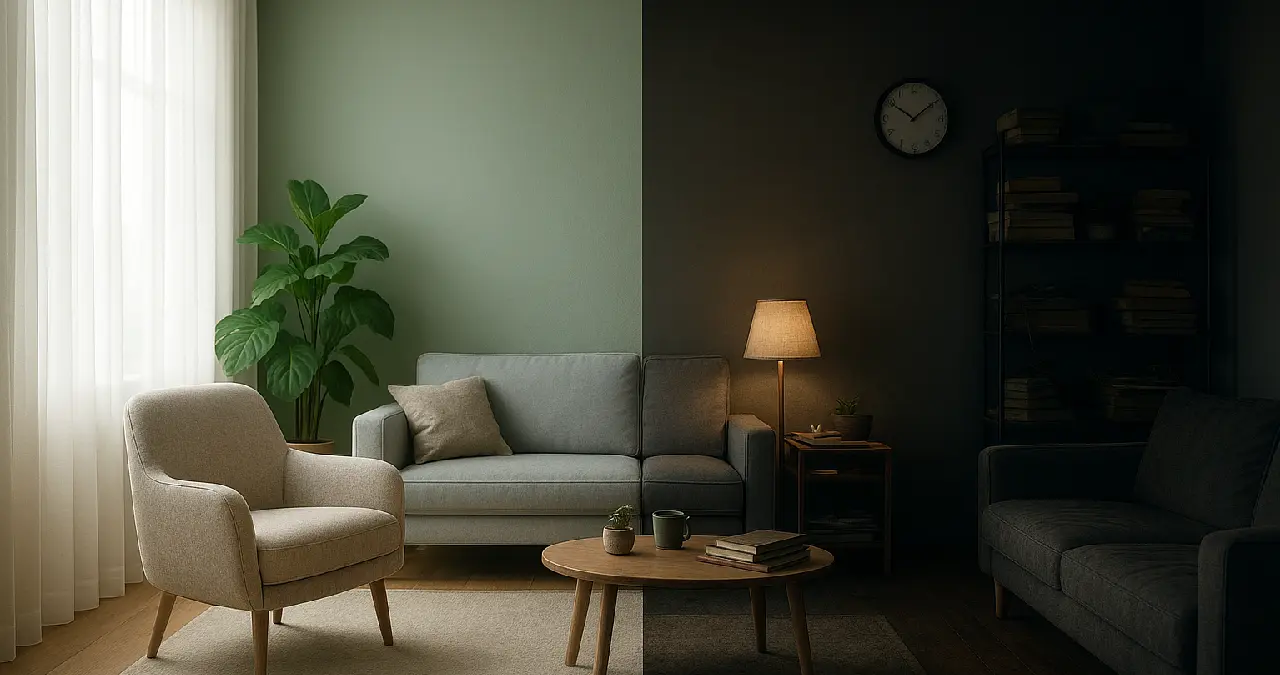
Ever walked into a room and instantly felt calm — or entered another and felt vaguely uneasy? That’s not just in your head. The spaces we inhabit speak to our minds. The right design can boost mood, energy, and mental balance. But the wrong setup — harsh lights, clutter, poor layout — can quietly drain your peace. In a world that’s often chaotic, your home deserves to be your sanctuary. With the right design choices, you can turn everyday living into everyday therapy. Let’s explore how.
The Psychology Behind Interior Design and Well‑being
How Spaces Influence Emotions, Mood, and Mindset
Our brains respond to visual cues — colour, light, layout, even texture. When a space feels balanced and welcoming, we feel calm, safe, and focused. When it’s chaotic or harsh, stress and restlessness creep in. Over time, these subtle signals add up, influencing sleep, productivity, and emotional well‑being.
Why Environmental Psychology Matters
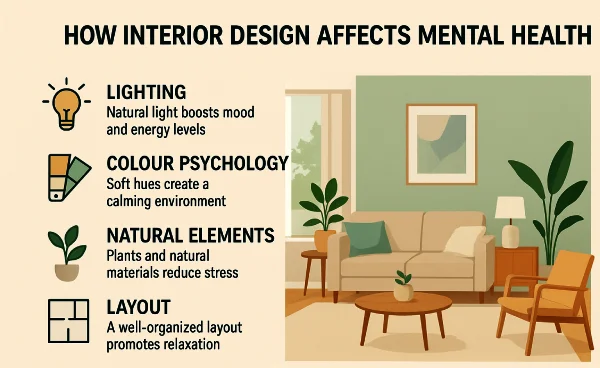
Interior design isn’t just about aesthetics. It’s about crafting environments that support human psychology. Environmental psychology shows that thoughtfully designed spaces — with good flow, natural light, and harmonious colours — can positively influence mood, reduce stress, and support better mental clarity.
Key Design Elements That Shape Mental Well‑being
Natural Light vs. Artificial Light
Sunlight is a powerful mood regulator. Exposure to daylight helps balance our circadian rhythms, boosts serotonin, and improves sleep and energy levels. Conversely, harsh fluorescent light or inadequate lighting can strain eyes, disturb mood, and increase anxiety. Opt for large windows, sheer drapes, mirrors (to bounce light), and warm-toned lamps to create a relaxed ambience.
Colour Psychology: What Your Walls Say to Your Brain
The hues you choose for walls, décor, and accents speak louder than words. Soft blues, greens, and muted neutrals tend to calm the mind — great for bedrooms or reading corners. Warm tones like soft yellows or pastel oranges inject energy and warmth — perfect for living rooms or creative spaces. Earthy neutrals offer balance, making multipurpose spaces feel stable and welcoming.
Layout & Spatial Flow: From Cluttered Chaos to Calm Harmony
Cluttered or cramped rooms never truly let the brain rest — it keeps scanning, processing, adjusting. That drains energy and can lead to mental fatigue. On the other hand, open layouts, clear pathways, organized storage, and strategic furniture placement reduce sensory overload and support mental ease. Minimalist design, hidden storage, and clean lines help create “visual breathing space.”
Bringing Nature In: Biophilic Design & Natural Elements
Humans have an innate affinity for nature. Adding plants, wooden furniture, natural fabrics, or stone elements grounds a space and reduces stress. A few leafy plants or a wooden table can bring calm and a sense of connection to nature — even indoors.
Sound, Acoustics & Quiet: Because Silence Also Heals
Noise — echo, chatter, sharp sounds — can disrupt focus, rest, and calm. Soft furnishings, rugs, curtains, plants — they absorb sound and create a peaceful acoustic environment. A calm soundscape supports relaxation, concentration, or restorative sleep.
Ergonomics & Comfort: Furniture that Respects Your Body and Mind
If your furniture is uncomfortable — a rigid chair, a bad mattress — your mind never truly relaxes. Ergonomic chairs, supportive beds, proper spacing all matter. When your body is at ease, your mind can follow.
Scent & Sensory Ambience: The Unseen Mood Shifters
Scent, texture, and ambience subtly influence our emotions. Clean air, pleasant scents (like subtle natural fragrances), soft fabrics, and cozy lighting create spaces that feel safe, relaxing, or invigorating — depending on what you need.
When Design Goes Wrong: How Poor Interior Choices Can Harm Mental Health
- Clutter & Crowding: Too many items, cramped space, lack of storage — they overload your senses, increase stress, and lower mental clarity.
- Harsh Lighting & Jarring Colours: Over‑bright lights or overly bold colours can cause sensory fatigue, irritability, and disrupt sleep.
- Chaotic Layouts & Lack of Privacy: If every area serves multiple functions (work, sleep, leisure) without separation, your brain struggles to switch modes — leading to poor rest and mental fatigue.
- Ignoring Comfort & Ergonomics: Uncomfortable furniture or posture-unfriendly design can cause physical strain, which over time affects mood and mental well‑being.
MintPalDecor’s Actionable Tips for a Mental‑Health‑Friendly Home
Let in the Light: Use Windows, Mirrors & Warm Lighting
- Keep windows clear, use light curtains, and place mirrors opposite windows to reflect daylight.
- For low-light spaces, use layered lighting: warm ambient lights + task lights + accent lights.
Choose Calming, Balanced Colours
- Use soft blues, greens, neutrals for rest zones (bedroom, reading nook).
- Use warm accents (yellow, peach) in social or creative areas, but avoid overdoing.
Declutter, Organize & Embrace Minimalism
- Use hidden storage, built-in shelves, multi-purpose furniture.
- Keep surfaces clean. Visible clutter = mental clutter.
Add Nature: Plants, Wood & Natural Textures
- Add indoor plants, wooden furniture, natural fabrics (cotton, jute).
- Use natural light and air — open windows often.
Sculpt Your Senses: Soft Fabric, Pleasant Smell, Calm Sound
- Use rugs, cushions, curtains. Add soft ambient light.
- Consider natural scents (like mild essential oils). Reduce noise with soft furnishings.
Zoning: Separate Spaces for Work, Relaxation, Sleep
- Create a desk/work area, a cozy reading/relaxation corner, and a restful bedroom.
- Even in small homes, use rugs or furniture placement to demarcate zones.
Prioritize Ergonomics & Comfort
- Choose chairs and mattresses that support posture.
- Ensure enough space to move, stretch. Avoid cramped corners.
Small Home? Use Smart, Budget‑Friendly Solutions
- Multi‑purpose furniture (sofa-bed, foldable tables).
- Vertical shelving.
- DIY décor — a coat of calming paint, a few plants, soft textiles.
Why This Matters — The Science & Benefits
Studies and design‑psychology research show that access to natural light, organized spaces, natural elements, and calming ambience contribute to better mood, improved focus, lower anxiety, and better sleep. Thoughtful home design isn’t cosmetic — it influences mental and emotional health, often in subtle but cumulative ways.
When your living space supports your body and mind, you feel more grounded, productive, relaxed — and more like yourself.
Final Thoughts: Make Your Home Work for Your Mind
Interior design isn’t luxury — it’s living, breathing therapy. A few mindful choices — light, colour, layout, comfort — can turn a house into a refuge, a hive of productivity, or a place of calm. You don’t need fancy furniture or money. You just need intention.
Start small, experiment, observe how changes make you feel. Let your space reflect your mind — calm, inspired, balanced.
FAQs
Can interior design really help reduce anxiety or improve mood?
Yes — when your environment supports comfort, calm, and balance. Natural light, soothing colours, clean layout, and comfort all contribute to better mental well‑being.
I live in a small apartment — will these tips still work?
Definitely. Even small spaces benefit from decluttering, thoughtfully placed lighting, a few plants, and well-chosen colour palettes. It’s about quality, not quantity.
Which colours are most calming for a home setting?
Muted greens, soft blues, light neutrals — these tend to evoke calm, balance, and tranquility. Warm accents (like soft yellows, peaches) can add warmth without overstimulation.
How important is lighting (natural or artificial) for mental well‑being?
Very important — good lighting regulates mood, energy, sleep, and focus. Natural light is best; warm, soft artificial lighting works where natural light lacks.
Is it worth investing in ergonomic furniture for mental health?
Yes. Physical comfort influences mental ease. A supportive chair or proper bed helps reduce body stress, which in turn helps your mind relax.