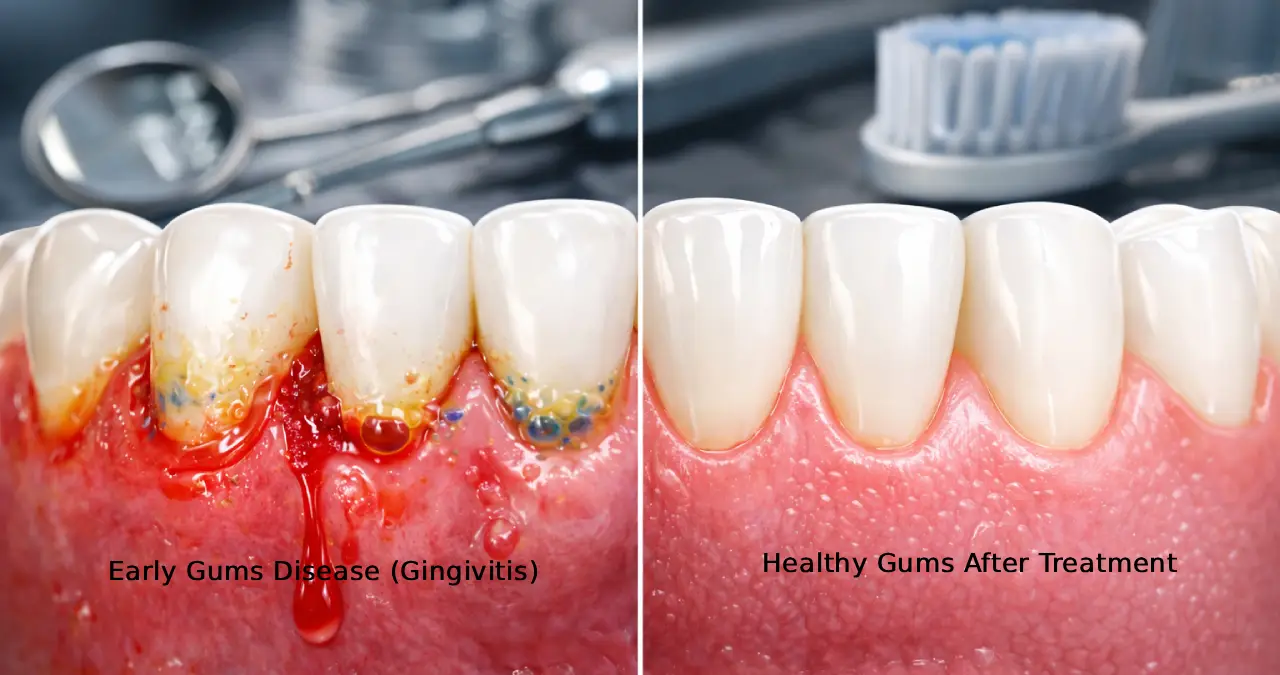
Bleeding gums.
Bad breath that doesn’t go away.
Tenderness while brushing.
These early warning signs often lead people to ask one critical question:
Can gum disease be reversed?
The short answer is yes—but only if it’s caught early.
Once gum disease reaches advanced stages, the damage becomes permanent.
Gum disease develops gradually and is often painless in the beginning. This makes it easy to ignore until serious damage occurs. Understanding the difference between early gum disease (gingivitis) and advanced gum disease (periodontitis) is the key to protecting your gums, teeth, and long-term oral health.
What Is Gum Disease (Periodontal Disease)?
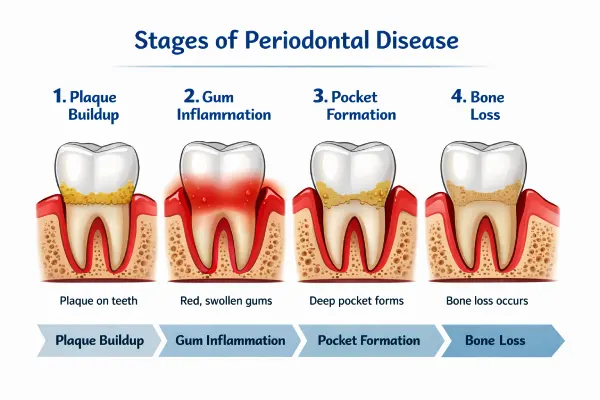
Gum disease, clinically known as periodontal disease, is a bacterial infection that affects the gums and the supporting structures of the teeth. It begins when plaque bacteria accumulate along and below the gumline.
If left untreated, gum disease progresses from mild gum inflammation to irreversible bone and tissue damage.
What Causes Gum Disease?
Plaque and Tartar Buildup
Plaque forms daily from bacteria, food particles, and saliva. If not removed, it hardens into tartar, which irritates the gums and triggers infection.
Poor Oral Hygiene
Infrequent brushing, skipping flossing, and irregular dental visits allow harmful bacteria to thrive.
Smoking and Tobacco Use
Smoking restricts blood flow to the gums and significantly reduces healing ability, increasing the risk of advanced gum disease.
Medical Conditions and Hormonal Changes
Diabetes, pregnancy, menopause, and immune disorders increase susceptibility to gum infections.
Stages of Gum Disease Explained
Gingivitis (Early Gum Disease)
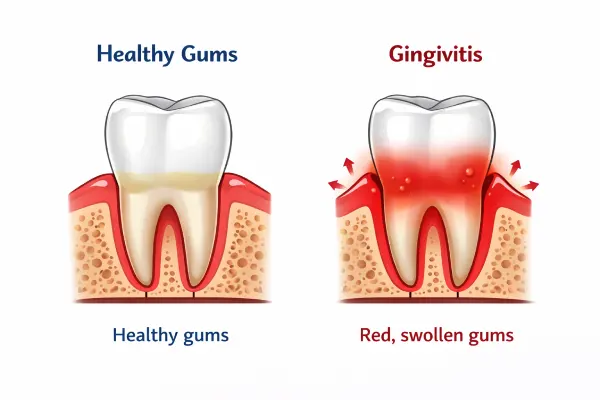
Gingivitis is the earliest and mildest stage of gum disease. At this stage, the infection is limited to the gums, and no bone loss has occurred.
Symptoms of Gingivitis
- Red or swollen gums
- Bleeding during brushing or flossing
- Mild gum tenderness
- Persistent bad breath
👉 This is the stage where gum disease can be reversed completely.
Periodontitis (Advanced Gum Disease)
If gingivitis is left untreated, it progresses to periodontitis, where damage becomes permanent.
Early Periodontitis
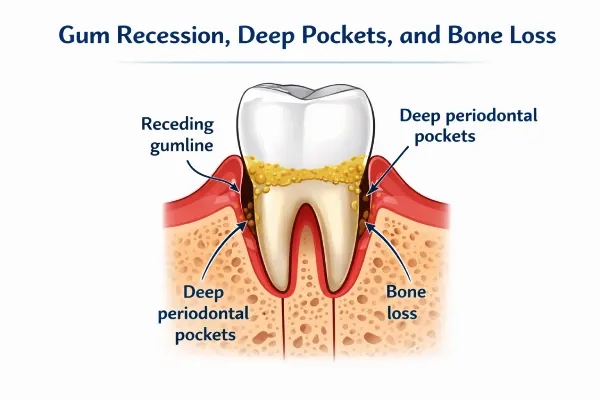
- Gums pull away from teeth
- Deep pockets form
- Early bone loss begins
Advanced Periodontitis
- Significant bone destruction
- Loose or shifting teeth
- High risk of tooth loss
👉 Advanced gum disease cannot be reversed—but it can be controlled with treatment.
How to Reverse Gum Disease Naturally in Its Early Stage
Reversing gum disease naturally is possible only during gingivitis.
Correct Brushing Technique
Brush twice daily using a soft-bristled toothbrush at a 45-degree angle to the gums.
Daily Flossing
Flossing removes plaque between teeth where gum disease often begins.
Antibacterial Mouthwash
Use dentist-recommended antimicrobial rinses to reduce harmful bacteria.
Professional Dental Cleaning
Professional cleanings remove hardened tartar that home care cannot eliminate.
Diet for Gum Healing
Vitamin C, vitamin D, calcium, and antioxidants support gum repair and immune function.
Treatment Options for Advanced Gum Disease
When gum disease is advanced, treatment focuses on controlling infection and preventing further damage.
Scaling and Root Planing
A deep cleaning procedure that removes bacteria from below the gumline.
Antibiotic Therapy
Topical or oral antibiotics help reduce bacterial infection.
Surgical Treatments
- Flap surgery for deep cleaning and gum reattachment
- Bone and tissue grafts to stabilize teeth and restore support
What Happens If Gum Disease Is Left Untreated?
Permanent Tooth Loss
Advanced gum disease is the leading cause of tooth loss in adults.
Systemic Health Risks
Research links untreated gum disease to heart disease, diabetes complications, and chronic inflammation.
How Long Does It Take to Reverse Gum Disease?
Gingivitis Recovery Timeline
With proper care, improvement is often seen within 7–14 days.
Managing Periodontitis
Advanced gum disease requires lifelong maintenance, not reversal.
How to Prevent Gum Disease From Returning
- Brush twice daily
- Floss consistently
- Visit the dentist every 6 months
- Avoid smoking
- Maintain a balanced diet
Consistency determines whether gums heal or relapse.
Common Myths About Gum Disease
“Bleeding gums are normal”
False. Bleeding indicates inflammation or infection.
“Only older adults get gum disease”
False. Gum disease can affect adults of all ages.
When Should You See a Dentist?
Seek professional care if you notice:
- Bleeding gums
- Gum recession
- Loose teeth
- Persistent bad breath
Early treatment prevents irreversible damage.
Conclusion
So, can gum disease be reversed?
✔ Yes—if caught early as gingivitis
✘ No—once it progresses to periodontitis
Timing, awareness, and consistent care make the difference between saving your gums and losing them. Treat gum health as a long-term investment—the earlier you act, the better the outcome.
Frequently Asked Questions
Can gum disease be reversed naturally?
Early-stage gingivitis can improve with excellent oral hygiene, but professional cleaning is recommended.
Is gum disease permanent?
Gingivitis is reversible. Periodontitis causes permanent damage but can be controlled.
How do I know if my gum disease is advanced?
Loose teeth, gum recession, and deep pockets indicate advanced stages.
Does gum disease cause pain?
Early stages are often painless, delaying diagnosis.
Can gums grow back after treatment?
Inflammation can heal, but lost gum tissue usually does not regenerate without surgical treatment.