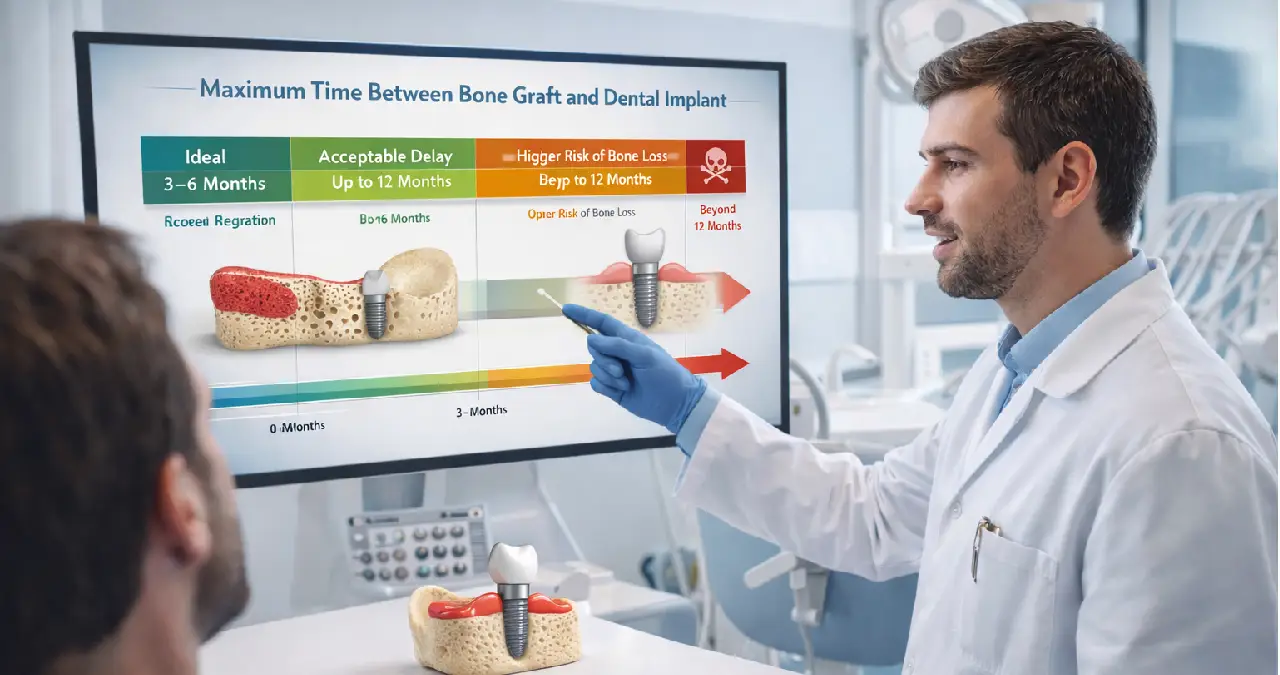
The maximum time between bone graft and dental implant is a critical factor that directly influences implant stability and long-term success. Dental implants depend on strong, well-integrated jawbone support. When bone grafting is required, timing is just as important as the procedure itself.
Placing an implant too early may result in poor primary stability. Waiting too long, however, can allow the grafted bone to gradually resorb—sometimes undoing the benefits of the graft altogether. Understanding the safest timeframe for implant placement after bone grafting helps reduce complications, prevent repeat surgeries, and control overall treatment costs.
What Is the Maximum Time Between Bone Graft and Dental Implant?
In most clinical situations, the maximum recommended time between bone graft and dental implant is up to 12 months.
- Ideal implant placement: 3–6 months after bone graft
- Acceptable maximum delay: Up to 12 months
- Beyond 12 months: Increased risk of graft resorption and need for additional grafting
According to implant specialists, grafted bone that is not functionally stimulated by an implant may gradually lose volume, which can compromise implant success over time.
These timelines are supported by implant dentistry research and widely accepted clinical protocols. However, individual healing rates can vary.
Why Timing Between Bone Graft and Dental Implant Matters
The jawbone is a living, biologically active tissue. Once a dental implant is placed, chewing forces are transferred into the bone, helping preserve bone density and volume. Without this stimulation, even successfully healed grafted bone may begin to resorb.
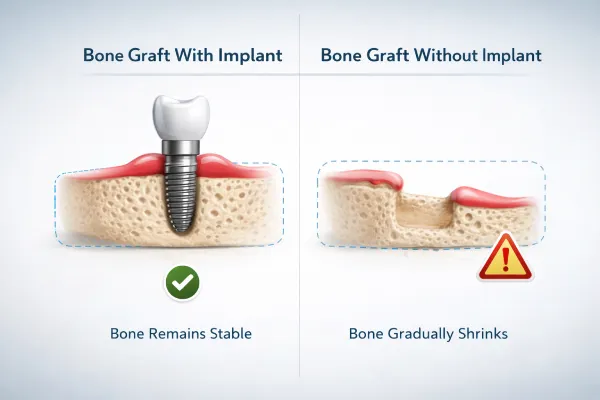
Delaying implant placement reduces this functional loading, increasing the risk of bone loss and reduced implant stability.
Bone Graft Healing Time Before Dental Implant Placement
Typical Healing Periods
Healing time depends on graft size, location, and material used:
- Standard bone grafts: 3–6 months
- Sinus lifts or larger grafts: 6–9 months
- Complex or extensive grafts: Up to 12 months
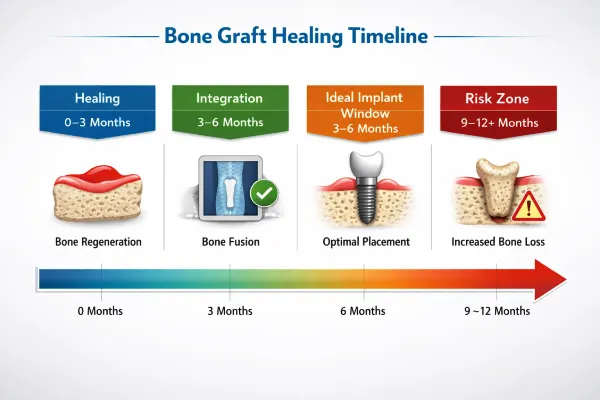
Implant placement should only occur after clinical examination and imaging confirm adequate bone integration and volume.
Ideal Time Frame for Dental Implant After Bone Graft
The optimal window for implant placement is between 3 and 6 months after bone grafting. During this period:
- Bone density is typically sufficient
- Graft integration is stable
- Risk of resorption is relatively low
Clinical studies consistently show the highest implant success rates when implants are placed within this timeframe.
What Happens If You Wait Too Long After a Bone Graft?
Delaying implant placement beyond recommended limits may result in:
- Progressive bone resorption
- Reduced bone height or width
- Compromised implant stability
- Increased likelihood of repeat bone grafting
Bone loss after grafting often occurs silently and may only become apparent when implant placement is attempted.
Can a Bone Graft Shrink If Implant Placement Is Delayed?
Yes. Grafted bone can gradually shrink if it does not receive mechanical stimulation. This natural process—known as bone resorption—occurs when the jawbone is not loaded by an implant or tooth replacement.
Immediate Dental Implant Placement After Bone Graft
In selected cases, implants may be placed at the same time as bone grafting.
Suitable Candidates
- Mild to moderate bone loss
- Ability to achieve primary implant stability
- Good oral and systemic health
Limitations
- Not suitable for severe bone defects
- Higher technique sensitivity
- Requires careful case selection by an experienced implant dentist
Factors That Affect the Time Between Bone Graft and Dental Implant
Bone Graft Material
- Autograft (patient’s own bone): Faster integration
- Allograft (donor bone): Moderate healing
- Xenograft (animal-derived): Slower remodeling
- Synthetic grafts: Variable outcomes
Graft Location
- Upper jaw and sinus areas generally heal more slowly
- Lower jaw grafts often integrate faster
Patient-Related Factors
- Smoking
- Uncontrolled diabetes
- Poor oral hygiene
- Certain medications
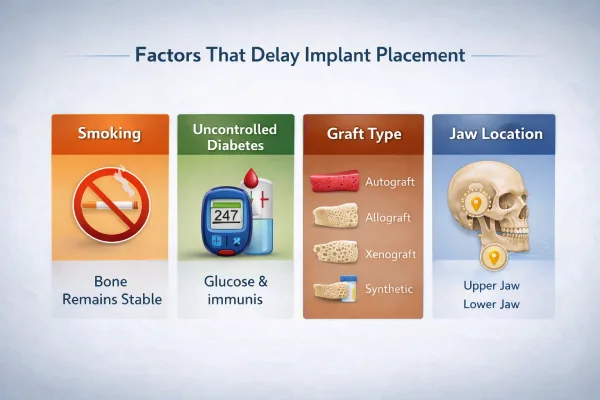
These factors can delay healing and extend the safe waiting period.
How Dentists Determine When a Bone Graft Is Ready for an Implant
Dentists assess graft readiness using:
- CBCT scans or digital X-rays
- Bone density evaluation
- Clinical examination for graft stability
Implant placement is recommended only when sufficient bone quality and volume are confirmed.
Cost Impact of Delaying Dental Implant After Bone Graft
Waiting too long can increase costs due to:
- Additional grafting procedures
- Extended treatment timelines
- More complex surgical planning
Timely implant placement helps preserve grafted bone and reduce long-term expenses.
Conclusion
The maximum time between bone graft and dental implant should not be underestimated. While the ideal placement window is 3–6 months, delaying beyond 12 months significantly increases the risk of bone resorption and implant complications.
Bone grafting rebuilds lost bone—but only dental implants help preserve it long term. Acting within the recommended timeframe supports implant success, cost efficiency, and long-term oral health.
If you’ve had a bone graft, consult your implant dentist within 3–6 months to protect your investment.
FAQs
How long can I wait after a bone graft for a dental implant?
Most patients should place the implant within 6 months; 12 months is generally considered the maximum safe limit.
What happens if implant placement is delayed too long?
Delayed placement increases the risk of bone resorption and may require additional grafting.
Is 12 months the maximum time between bone graft and dental implant?
In most cases, yes. Waiting beyond 12 months significantly raises the risk of graft shrinkage.
Can a bone graft fail if I delay implant placement?
Lack of stimulation can lead to resorption, which may compromise graft success.
How does my dentist know when the bone graft is ready?
Through clinical evaluation and imaging that confirm bone integration and density.