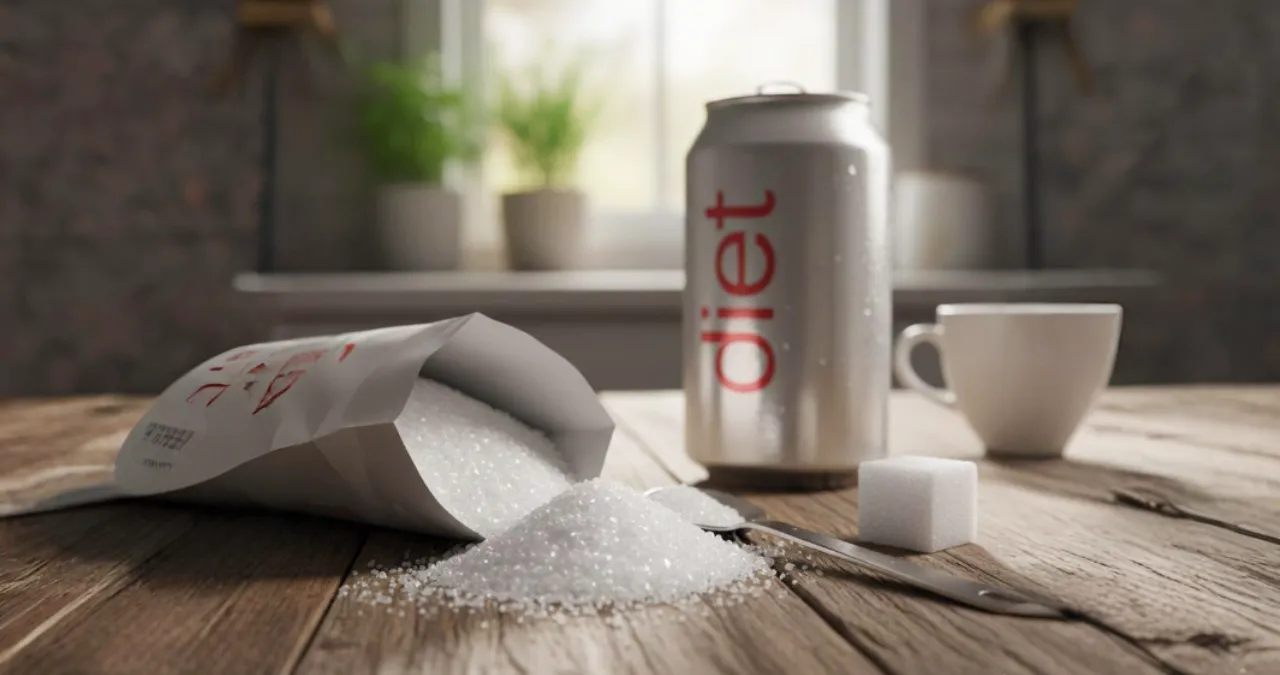
Craving a cold soda or a sweet dessert but worried about sugar, calories, or blood-sugar spikes? You’re not alone. Many of us juggle the desire for sweetness with the reality of diets, diabetes risk, weight goals, or dental concerns. That’s why sugar alternatives have boomed — and among them, a name has been floating around lately: “Aspertaan”.
Sounds fancy, right? But is it real — or just a misheard name for something else? In this guide, we’ll dig deep: we’ll explore what “Aspertaan” likely refers to, what science and regulators say about it, the pros and cons, and how you can make informed choices if you decide to use it.
What Exactly Is “Aspertaan”?
“Aspertaan”: Real name — or confusion?
- A thorough look at scientific literature, regulatory documents, and reputable health sources reveals no recognized sweetener called “Aspertaan.”
- Instead, a widely used artificial sweetener named Aspartame pops up consistently. Because “Aspertaan” sounds similar to “Aspartame,” and due to occasional transliteration, mis-spelling or mis-pronunciation, many people likely use “Aspertaan” when they actually mean Aspartame.
- Therefore: treat “Aspertaan” as a probable mis-nomer. For the rest of this article, we’ll discuss Aspartame — the sweetener most people actually mean.
Understanding Aspartame — What It Is and Why It’s Popular
What is Aspartame — chemically speaking
- Aspartame is a low-calorie artificial sweetener: a methyl ester of a dipeptide combining the amino acids L-aspartic acid and L-phenylalanine.
- Because it is ≈ 200 times sweeter than regular sugar, only a very small amount is needed to achieve the desired sweetness. That makes it attractive for cutting calories and reducing sugar intake.
Why it became widely used
- It allows manufacturers to create “diet,” “zero-sugar,” or “sugar-free” versions of drinks and foods, offering sweetness without the large caloric load of sugar.
- It’s been used globally for decades — in beverages, desserts, chewing gum, yogurts, low-calorie foods, and many other processed products.
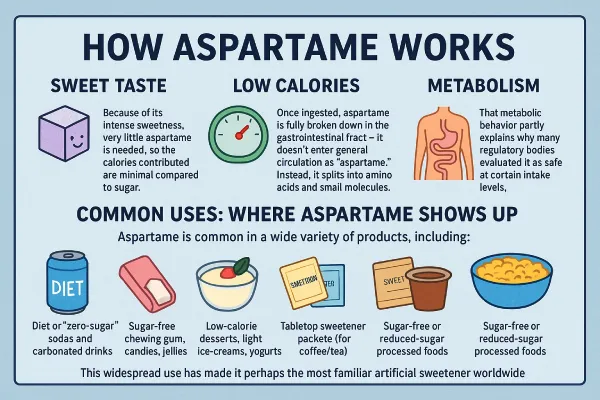
How Aspartame Works: Sweet Taste, Low Calories, and Metabolism
- Because of its intense sweetness, very little Aspartame is needed, so the calories contributed are minimal compared to sugar.
- Once ingested, Aspartame is fully broken down in the gastrointestinal tract — it doesn’t enter general circulation as “Aspartame.” Instead, it splits into amino acids and small molecules, similar to those obtained from normal foods.
- That metabolic behavior partly explains why many regulatory bodies evaluated it as safe at certain intake levels.
Common Uses: Where Aspartame Shows Up
Aspartame is common in a wide variety of products, including:
- Diet or “zero-sugar” sodas and carbonated drinks
- Sugar-free chewing gum, candies, jellies
- Low-calorie desserts, light ice-creams, yogurts
- Tabletop sweetener packets (for coffee/tea)
- Sugar-free or reduced-sugar processed foods (breakfast cereals, puddings, gelatin desserts)
This widespread use has made it perhaps the most familiar artificial sweetener worldwide.
2023 Update: What Science & Regulators Say About Aspartame
IARC / WHO classification: “Possible Carcinogen”
- In July 2023, the cancer-research arm of World Health Organization (WHO), the International Agency for Research on Cancer (IARC), released a hazard evaluation of Aspartame and classified it as “possibly carcinogenic to humans (Group 2B)”.
- This classification was based on limited evidence in humans (some studies found an association between high consumption of artificially sweetened beverages and a type of liver cancer), limited evidence from animal studies, and limited mechanistic evidence (possible oxidative stress, inflammation, cell proliferation) under high exposures.
- Important nuance: “Group 2B” means possible hazard — not a proven cause. It indicates the need for more research, not definitive condemnation.
JECFA and Acceptable Daily Intake remains unchanged
- In parallel, the Joint FAO/WHO Expert Committee on Food Additives (JECFA) reaffirmed Aspartame’s acceptable daily intake (ADI): 40 mg/kg body weight per day — the same as before.
- For context: that corresponds roughly to 9–14 half-liter cans of artificially-sweetened soda per day for a 70 kg adult before reaching the limit.
- Many food-safety authorities (including regulators in the U.S., EU and other regions) continue to consider Aspartame safe for use when consumed within approved levels.
Regulatory bodies’ differing views — why confusion exists
- IARC is a hazard identification body — it evaluates whether a chemical can cause cancer under some circumstances, not whether using it under realistic human exposures is dangerous.
- Food-safety agencies (like those following JECFA) assess actual risk, taking into account typical exposures, metabolism, and safety margins — and currently they stand by Aspartame’s safety under the ADI.
- In short: IARC raised a flag for hazard; JECFA and many regulators maintain safety under normal use.
Pros of Aspartame: Why People Use It
Using Aspartame — or sugar substitutes in general — can offer some benefits:
- Reduced calorie & sugar intake — helpful for weight control or trying to avoid “empty calories.”
- Lower impact on blood glucose levels — may be useful for people managing diabetes or pre-diabetes (though diet overall still matters).
- Dental benefits — unlike sugar, artificial sweeteners don’t feed oral bacteria that cause tooth decay.
- Convenience & accessibility — widely available in processed “light” or “zero-sugar” products, enabling people to enjoy sweet foods with fewer calories.
Cons, Risks & Controversies — What to Watch Out For
Possible long-term risk signals
- The 2023 IARC evaluation raised a possible link to cancer — though evidence is limited and not conclusive.
- Some experts argue that even if risk per person is low, widespread exposure (especially over decades) could pose public-health concerns.
Uncertainty & mixed evidence
- Many prior studies did not find a strong association between typical Aspartame consumption and cancer or major health harms.
- The conflicting viewpoints — hazard identification vs risk assessment — create confusion for consumers.
Risk of overconsumption & “false security”
- Because Aspartame is low-calorie, there’s a risk people assume they can consume unlimited “diet” or “sugar-free” products — but overconsumption (sodas, processed foods) brings other issues: high sodium, additives, low nutritional value.
- Aspartame doesn’t make foods “healthy” — only lower in sugar/calories. Nutritional balance still matters.
How Much Is Safest? Understanding the Acceptable Daily Intake (ADI)
- ADI for Aspartame is 40 mg per kilogram of body weight per day (JECFA standard).
- For a 70 kg adult, that’s about 2,800 mg/day. Given that a typical diet-soda can might contain ~200–300 mg, you’d need 9–14 cans a day to hit the limit — assuming no Aspartame from other sources.
- That suggests typical moderate consumption is unlikely to exceed the ADI. However, if you’re consuming many such products daily, the cumulative intake (plus other sources) could become significant.
Practical Advice: If You Use Aspartame (or “Aspertaan”) — Do It Smart
If you choose to include Aspartame-sweetened foods or drinks: consider these sensible tips:
- Read ingredient labels carefully — look for “aspartame” or its code (e.g. “E951” in some regions). Avoid assuming “zero-sugar” always means “safe/unlimited.”
- Moderation matters — treat Aspartame as a tool, not a license to binge on sodas or processed “diet” foods.
- Prefer whole foods & minimize ultra-processed diet foods — fruits, natural foods, water, unsweetened drinks often are healthier overall.
- Limit frequency and variety — if you drink diet sodas, avoid stacking with sweets, desserts, sugar-free gums, etc.
- Stay alert to new research — as the 2023 review shows, scientific understanding evolves. Moderation and awareness remain wise.
Alternatives to Aspartame — What Else Is Out There
If you’re uncomfortable with artificial sweeteners or want to reduce sweetness altogether:
- Natural sweeteners (or lower-calorie alternatives) — for example, Stevia, sugar alcohols (polyols), though each has its own pros/cons.
- Gradually train your palate to enjoy less sweet — many find that over time, they actually appreciate mild sweetness or more natural flavors.
- Use real sugar in moderation — for cooking or occasional treats, small amounts of regular sugar might be simpler, especially for heating/baking (since Aspartame degrades with heat).
Is Aspartame (or “Aspertaan”) a Good Choice — in 2025?
Yes — but only with caution and moderation.
Aspartame remains among the most studied artificial sweeteners. Regulatory bodies still consider it safe within established limits. For someone wanting occasional low-calorie sweetness, it can be a useful tool.
That said — given emerging hazard classification, mixed evidence, and public-health scale exposure — relying heavily on diet sodas or processed “sugar-free” foods isn’t a golden ticket to health. Think of Aspartame like a spice: helpful when used sparingly, but unwise to make your entire diet around.
Balance, variety, and awareness should guide your sweet choices — not marketing labels.
FAQs
What is the difference between “Aspertaan” and “Aspartame”?
“Aspertaan” appears to be a mis-pronunciation or mis-spelling of “Aspartame.” There is no official sweetener registered under the name “Aspertaan.” Most credible references, research studies, regulatory documents and food-safety agencies refer only to Aspartame.
Is Aspartame safe to use given the recent 2023 IARC classification?
Regulatory bodies such as the Joint FAO/WHO Expert Committee reaffirmed that consumption under the Acceptable Daily Intake (ADI) remains safe. That said, IARC’s “possibly carcinogenic” classification signals a need for caution — especially with heavy or frequent consumption.
How much Aspartame is too much?
The ADI is 40 mg per kg body weight per day. For a 70 kg adult, that’s ~2,800 mg per day. Hitting that limit via soft drink cans would require consuming roughly 9–14 soda cans in a day (assuming only those drinks contribute Aspartame).
Does using Aspartame mean I can eat unlimited “sugar-free” snacks and drinks safely?
Not necessarily. Even if Aspartame is within safe limits, many “sugar-free” or “diet” foods are still processed, may contain other additives, and offer little nutritional value. Over-reliance on them means you may miss out on nutrients from wholesome foods.
What are good alternatives to Aspartame for someone avoiding artificial sweeteners?
You can consider natural sweeteners like Stevia, sugar alcohols (polyols), or even gradually reduce overall sweet preferences — embracing less-sweet or unsweetened taste. For baked or heated foods, regular sugar (used in modest amounts) may still be simpler than many heat-unstable sweeteners.