
Imagine stepping out of your eye doctor’s office and feeling like the world suddenly turned overly bright and slightly out of focus. That’s a common experience after an eye dilation exam. Knowing what not to do after eye dilation is just as important as understanding the test itself. Ignoring proper aftercare can lead to eye strain, discomfort, and safety risks.
This complete guide explains what to avoid after eye dilation, why it matters, and how to help your eyes recover comfortably.
What Is Eye Dilation?
Eye dilation is a routine part of a comprehensive eye exam. Your eye doctor uses special eye drops to widen your pupils, allowing a clear view of the retina, optic nerve, and blood vessels at the back of the eye.
Why Eye Dilation Is Performed
Eye dilation helps detect serious eye conditions early, including:
- Glaucoma
- Macular degeneration
- Diabetic retinopathy
- Retinal damage or tears
Early diagnosis can prevent permanent vision loss.
How Long Do Eye Dilation Effects Last?
For most people, dilation effects last 2 to 6 hours, depending on:
- The type of eye drops used
- Your age
- Individual sensitivity
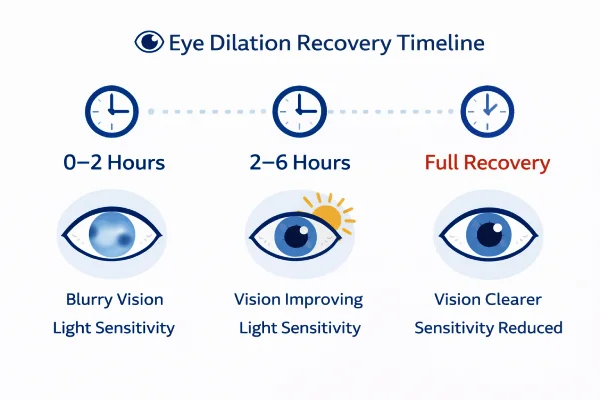
During this time, your pupils stay enlarged, allowing excess light into your eyes.
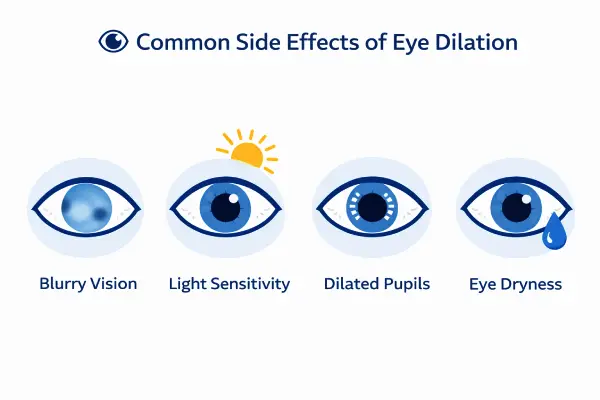
Common Side Effects After Eye Dilation
Blurry Vision
Your eyes struggle to focus, especially on nearby objects like books or phones.
Light Sensitivity
Bright sunlight, screens, and headlights may feel harsh and uncomfortable.
What Not to Do After Eye Dilation (Important Safety Tips)
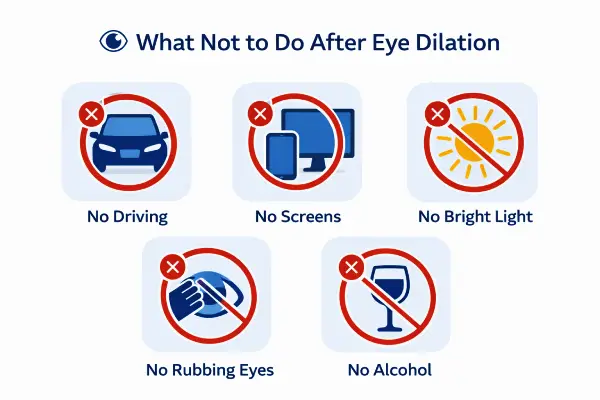
Here’s exactly what not to do after eye dilation to protect your vision and stay safe.
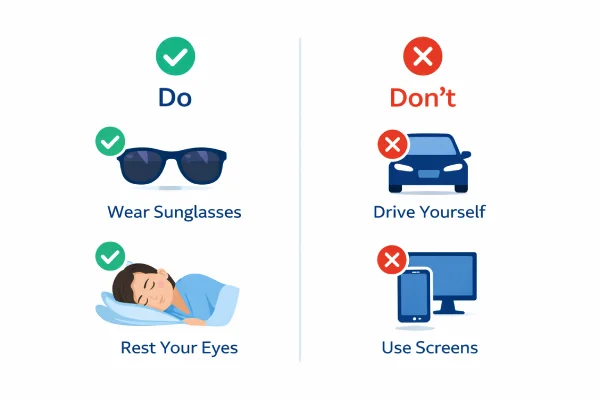
❌ Don’t Drive Immediately
Blurred vision and glare can make driving dangerous. Arrange a ride home or wait until your eyesight returns to normal.
❌ Avoid Bright Sunlight and Harsh Lighting
Your pupils can’t block light effectively. Sunlight and indoor glare may cause eye pain or headaches.
❌ Avoid Using Digital Screens
Phones, tablets, TVs, and computers increase eye strain when your eyes are dilated.
❌ Don’t Read Small Print or Do Close-Up Work
Reading or focusing on fine details can worsen discomfort and fatigue.
❌ Don’t Rub or Touch Your Eyes
Rubbing can irritate the cornea or introduce bacteria, increasing infection risk.
❌ Avoid Strenuous Exercise
Running, heavy workouts, or intense movement may cause dizziness or worsen visual instability.
❌ Don’t Operate Heavy Machinery
Any activity requiring sharp vision or coordination should be avoided until dilation wears off.
❌ Avoid Swimming or Water Exposure
Water may introduce irritants or bacteria to already sensitive eyes.
❌ Don’t Wear Contact Lenses Immediately
Dilated eyes are often dry. Glasses are safer and more comfortable during recovery.
❌ Avoid Eye Makeup
Makeup can trap particles near the eyes, increasing irritation risk.
❌ Avoid Alcohol
Alcohol dehydrates the body and may intensify blurred vision or dryness.
How to Care for Your Eyes After Dilation
Following proper aftercare speeds recovery and improves comfort.
✔ Wear UV-Blocking Sunglasses
They reduce glare and protect sensitive eyes from UV exposure.
✔ Rest in a Dimly Lit Room
Low light helps your pupils adjust back to normal.
✔ Use Doctor-Approved Artificial Tears
Preservative-free eye drops can relieve dryness if recommended by your eye doctor.
When to Call Your Eye Doctor
Seek medical help immediately if you experience:
- Severe or increasing eye pain
- Sudden vision loss
- Persistent redness or discharge
- Symptoms lasting longer than 24 hours
These are not normal after dilation.
Tips to Recover Faster After Eye Dilation
- Arrange transportation before your appointment
- Keep sunglasses handy
- Schedule exams when you don’t need to drive
- Avoid screen-heavy tasks for the rest of the day
Myths vs Facts About Eye Dilation
Myth: Going outside will damage your eyes
Fact: Sunlight won’t harm your eyes, but sunglasses prevent discomfort.
Myth: Screens are completely forbidden
Fact: Limited use is okay, but minimizing screen time reduces strain.
Conclusion
Understanding what not to do after eye dilation helps you protect your eyes and avoid unnecessary discomfort. From avoiding driving and bright light to limiting screens and skipping contact lenses, these precautions ensure a smooth and safe recovery. Give your eyes time to adjust — they work hard for you every day.
FAQs
Can I drive after eye dilation?
It’s best to avoid driving until your vision returns to normal.
How long does eye dilation last?
Typically 2–6 hours, but it varies by individual.
Can I use my phone after eye dilation?
Yes, but limit use to prevent eye strain.
When will my vision return to normal?
Most people recover within a few hours.
Is bright light harmful after eye dilation?
Not harmful, but uncomfortable without sunglasses.